/)



Innovation spaces for the development of deep tech businesses: The Latin American Division meets in Colombia in 2026
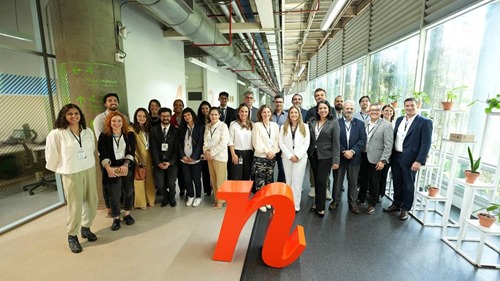
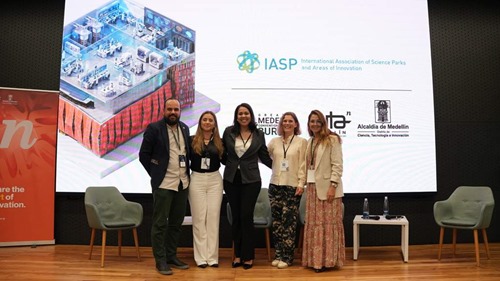
/IASP_LATAM_group_picture_in_medellin.jpg)
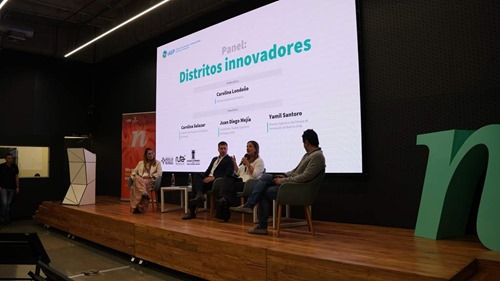
The IASP Latin America Division Conference this year brought together members, innovators and leaders from across the region in Medellin, Colombia on 23 and 24 April, with Ruta N as host and this year's facilitator of conversations, collaboration, and networking.
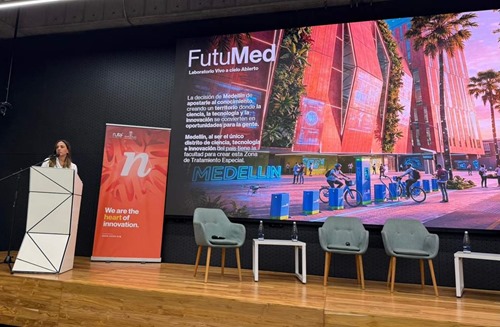
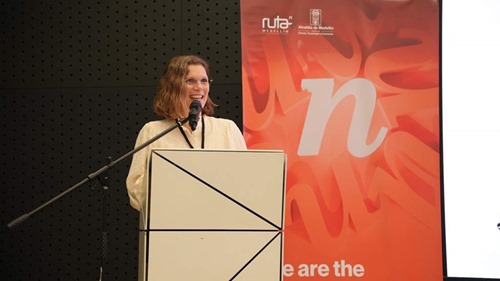
The theme for this year's IASP Latin American Division was “Innovation spaces for the development of deep tech businesses”. Welcomed by Ruta N's Executive Director Carolina Londoño, IASP Latin American Division President Adriana Ferreira de Faria, IASP CEO Ebba Lund and Carlos Franco Pachón of Ruta N. The opening set the tone: over the past 25 years, science parks and innovation districts have undergone a profound transformation, becoming more urban, more specialised, and more deeply embedded in the cities they serve, with sustainability and public-private collaboration increasingly at their core. The speakers highlighted the importance of strengthening global connections and reaffirmed the mission of innovation ecosystems in driving social and economic impact in their regions.
Medellin embodied this evolution throughout the entire event. As Colombia’s only officially designated District of Science, Technology and Innovation, the city is advancing a development strategy built on entrepreneurship, talent and business, with co-creation between academia, government, industry, and citizens at its heart. At the center of this ecosystem, Ruta N leads the city’s innovation agenda with FutuMed (a recently launched open-air living lab spanning 1.8 square kilometers supported by more than 20 partners) serving as a flagship example of how innovation districts can translate concepts into tangible urban impact.
Day 1 brought together perspectives from Argentina, Brazil, Colombia and Cuba, among others, to examine how innovation districts and science and technology parks are evolving as drivers of economic development; highlighting a shared understanding that their success depends on effectively connecting talent, capital and technology while fostering strong institutional and community alignment. Throughout the morning, speakers emphasised the growing role of innovation spaces as platforms for deep tech entrepreneurship, enabling the creation and scaling of high-impact ventures through close collaboration with universities, governments and a broader range of innovation actors. Persistent challenges around financing were also noted, particularly the need for sustainable financial models, robust impact measurement, and more sophisticated approaches to evaluating technology-driven companies. In the afternoon, attention turned to the development and scaling of deep tech ventures, with insights from Ruta N’s forthcoming report showing that around 17% of the more than 645 companies mapped via their StatIA platform qualify as deep tech, with notable potential in health, agrifood and green technologies. Discussions on incubation and acceleration underlined the vital role of universities and technology transfer entities in bridging research and market, alongside the importance of collaboration in an increasingly complex landscape. The day concluded with a focus on impact, showcasing real cases of startups evolving into scalable solutions delivering social, economic and environmental value, and identifying key success factors including institutional stability. Closing remarks from Ebba Lund, Adriana Ferreira de Faria and Carlos Franco brought an insightful and energetic first day to a close.
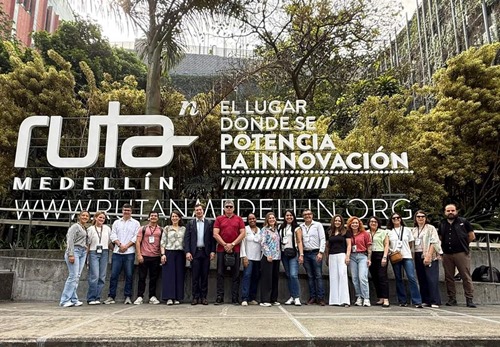
The second day brought a shift from strategy to reality, as participants explored Medellin’s innovation ecosystem firsthand through a tech tour of FutuMed. The visits offered a vivid illustration of how innovation districts function as living systems, where institutions, academia and communities interact to address real challenges and co-create shared value.
The first stop was Hospital San Vicente Fundación, a cornerstone of the district and a striking example of how a traditional institution can evolve into a hub without losing its historical identity. The hospital today serves predominantly low-income populations while advancing high-complexity care, research, and education. Following this, Universidad de Antioquia, one of Colombia’s leading public universities, showcased a powerful model of regional support, aligning academic programmes and research capacities with the specific needs and opportunities of each territory, and strengthening the link between knowledge and real-world application. A visit to Parque Explora further reinforced the importance of the social ownership of knowledge, bringing science and technology closer to citizens and underscoring the connection between innovation and society.
The two days closed with a shared sense of energy and purpose. We extend our sincere thanks to Ruta N Medellín for their generous hospitality and for opening their remarkable ecosystem to the IASP community, and to all participants for the richness of the conversations and the spirit of openness that made this gathering so valuable.


/canvascolor(0xffffffff)/MemberLogo-36401-6008.png)
/canvascolor(0xffffffff)/logo_46.png)
/canvascolor(0xffffffff)/Asset_21@30x_1.png)
/canvascolor(0xffffffff)/2017_06_19_South_Africa_The_Innovation_Hub.emf.jpg)
/canvascolor(0xffffffff)/KL_LOGO_stor.jpg)
/canvascolor(0xffffffff)/Foshan_Logo.png)
/canvascolor(0xffffffff)/MemberLogo-5640-6065.jpg)
/canvascolor(0xffffffff)/2024_03_01_Brazil_PCT_Sao_Jose_Dos_Campos.jpg)
/canvascolor(0xffffffff)/Tech_Parks_Arizona_1.png)
/canvascolor(0xffffffff)/2018_01_25_Italy_Comonext.png)
/canvascolor(0xffffffff)/2017_08_04_fundecyt-pctex-h.png)
/canvascolor(0xffffffff)/logo_21.png)
/canvascolor(0xffffffff)/2017_10_26_Portugal_Tecmaia.png)
/canvascolor(0xffffffff)/2025_09_04_Malaysia_MRANTI.jpg)
/canvascolor(0xffffffff)/MemberLogo-58801-6311.png)
/canvascolor(0xffffffff)/TusPark_Belgium.png)
/canvascolor(0xffffffff)/2017_11_03_Spain_PT_de_Asturias.jpg)
/canvascolor(0xffffffff)/Logo_ZEDE_Color_1.jpg)
/canvascolor(0xffffffff)/pcyt_3.jpg)
/canvascolor(0xffffffff)/International_STP_Turkmenistan.png)
/canvascolor(0xffffffff)/healthcampus_logo_notext_transparant_7.png)
/canvascolor(0xffffffff)/Adlershof_rgb.jpg)
/canvascolor(0xffffffff)/2025_08_22_USA_VISTA.png)
/canvascolor(0xffffffff)/2017_11_17_Taiwan_Southern_Taiwan_SP.png)
/canvascolor(0xffffffff)/2025_02_18_China_Nanjing_Gulou_Hi-Tech_Industrial_Devt_Zone.png)
