/)



Peers Around the World: Turning innovation experience into ecosystem growth
/Agnes_Roos_on_stage_2024.jpg)
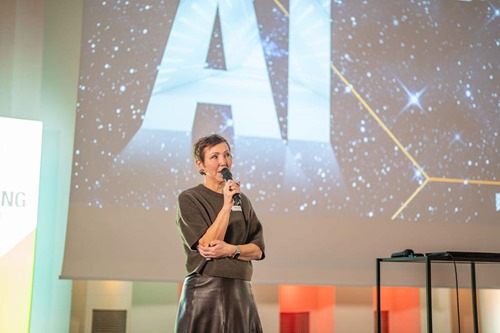
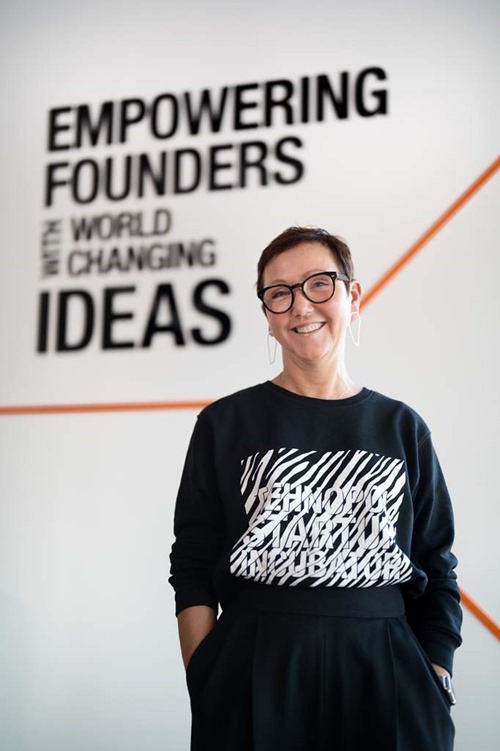
In this month’s edition of our Peers Around the World series, where we hear from leaders in innovation from across our global network, we spoke with Agnes Roos, CEO at Tehnopol Science and Business Park in Estonia . She shared her journey on becoming Tehnopole's CEO, the experience with the NATO DIANA accelerator, and how sustainability is a professional and personal driver for her work today.
Your career spans IT, digital strategy, and over a decade in the energy sector before stepping into the science park ecosystem. What were the pivotal moments or decisions that led you to take on the role of CEO at Tehnopol?
There wasn’t a single turning point or decision. Throughout my entire professional career, innovation and its management have been my guiding principles. I have helped build a modern bank from the ground up and supported its international expansion, led digital transformation in the energy sector, and developed innovative energy solutions and retail products. My connection with Tehnopol actually started before I became CEO. While working in the energy field, I became aware of Tehnopol through its accelerator activities, and that brought the organisation into my active field of view in a very concrete way. Over time, the opportunity to lead Tehnopol felt like a natural next step – a chance to contribute to innovation from a broader ecosystem perspective.
Having worked extensively in energy and sustainable transformation, do you see sustainability as a personal or professional driver in your work today? How does that manifest in your current role?
Sustainability is both a professional and a personal driver in my work today. I believe it will remain important regardless of sector or role, but it needs to be approached with reason and a long-term view rather than through radicalism or greenwashing. New technologies are often embraced enthusiastically at first, before their full impact can be measured, and public debate can quickly swing from one extreme to another, shaped by loud and narrow viewpoints.
That is why I believe we need to look at the full lifecycle and supply chain of any solution, not just one part of the story. At the same time, while adopting new technologies is essential for long-term progress, we should not leave the potential of existing technologies unused and create unnecessary additional pressure on our economy. Sustainability should be guided by balanced judgment, not by campaigns that override common sense.
How does Tehnopol’s involvement in the NATO DIANA accelerator shape your approach to supporting deep tech and dual-use startups, particularly in bridging the gap between innovative technologies and traditionally closed defence markets?
That’s a very good question. The NATO DIANA accelerator has taught us a great deal and helped us grow significantly. It has shown that even in a traditionally closed sector like defence, it is possible to build meaningful collaboration across the Alliance when the ambition is high, the goals are clear, and the right partners and experts are involved. Just as importantly, it has given us the confidence to strengthen our wider support model for deep tech and dual-use companies.
Around this, we have built an entire pipeline: a pre-accelerator to help companies prepare, a cyber accelerator, Defence Innovation Day as part of Estonian Defence Week, and other initiatives that create entry points for startups at different stages. Altogether, this has made us much more mature as an organisation and better equipped to help bridge innovative technologies with traditionally closed markets.
With Tehnopol active in AI, health tech, and digital technologies, how do you personally stay ahead of fast-moving technological trends?
It’s true that technology today no longer changes over the course of years, but rather days, and it’s impossible to stay on top of everything. I personally can’t keep up with all the technological trends in the field; that kind of field-specific knowledge is maintained by Tehnopol field leaders. I try to stay up to date on broader technology trends by using various sources. But just as with any kind of change, getting to know new technologies takes time and requires making them your friend—first understanding the opportunities new apps offer, then testing their use, and finally integrating them into your daily life. At Tehnopol, we’ve launched a series of events, ‘Tehnopol Tech Friday’, to introduce new technologies and help our employees adopt them as tools. I always participate in these events myself, learning and developing my skills as well.
Tehnopol hosted the IASP World Conference in 2012. If a past delegate of that conference were to visit the park today, what notable changes would they see? Which key initiatives have been instrumental in shaping Tehnopol into what it is today?
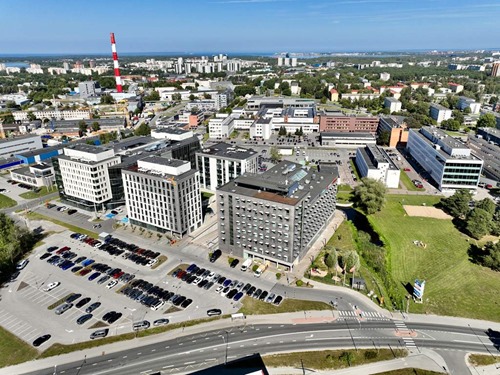
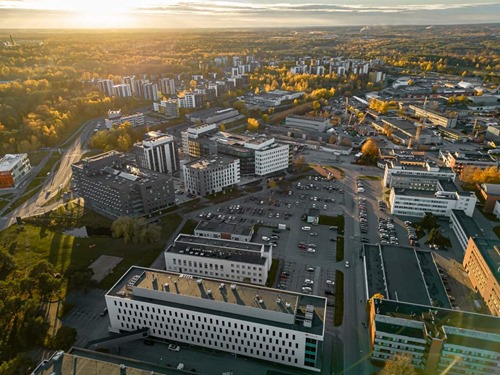
It is a difficult question for me to answer, as I have only been at Tehnopol for a little over two years. But from an outside observer’s perspective, the changes are clearly visible. The campus itself has grown, with new buildings and a broader range of services that support a modern working environment, including restaurants, childcare, healthcare services, and fitness options.
What stands out even more is how Tehnopol has evolved in substance. Our startup support has become much more specialised, moving from a broader focus towards fields such as cyber technology, deep tech, and AI. We are also more international today, through global projects and a mentor network with highly specialised expertise. At the same time, the campus itself serves as a sandbox for innovation, with solutions such as Starship delivery robots and a smart pedestrian crossing already part of the everyday environment.
You are a volunteer member of the 'Digital Transformation in Business' programme for non-IT leaders to successfully drive digital changes in their respective companies. You are also involved in the Tehnopol mentor community. How has volunteering and mentoring others informed your leadership style?
I would not say that volunteering and mentoring have directly changed my leadership style, but they have definitely enriched me as a leader. Mentoring others encourages you to reflect more deeply on your own experiences with change, decision-making, and leadership, and to turn those experiences into something useful for others. It is a two-way process: while you support other leaders and companies, you also learn continuously yourself.
For me, mentoring is a constant source of inspiration in everyday work. Working directly with companies helps me experience Tehnopol’s mission in a very practical way – supporting world-changing technology entrepreneurship and innovation, and helping turn ambitious ideas into reality. That connection between strategy and real-life entrepreneurial challenges keeps my perspective fresh and grounded.
Outside of your professional role, what helps you stay grounded and maintain perspective in a high-responsibility position such as CEO?
My family and friends help me stay grounded. The close connection I have with them, and the time we spend together, are where I draw much of my strength and energy from.
My dogs – two energetic terriers – also make sure I keep moving, no matter how busy life gets. In that sense, they are a very practical reminder to step outside, clear my mind, and reset. As an Estonian, being close to nature is also important to me. Time outdoors helps me maintain perspective, recharge, and return to work with a calmer and clearer mindset.


/canvascolor(0xffffffff)/ZICER_Logo.jpg)
/canvascolor(0xffffffff)/MemberLogo-5557-5966.jpg)
/canvascolor(0xffffffff)/PCT-GUAM_-LOGO-NORMAL_1.png)
/canvascolor(0xffffffff)/2021_08_20_China_Baixia_High-Tech_Zone.jpg)
/canvascolor(0xffffffff)/WhatsApp_Image_2024-03-11_at_10.37.06.jpg)
/canvascolor(0xffffffff)/UC-KALARY_5.png)
/canvascolor(0xffffffff)/MemberLogo-36401-6008.png)
/canvascolor(0xffffffff)/1200px-Logo_Sophia_Antipolis_12.png)
/canvascolor(0xffffffff)/2017_08_04_Eindhoven.png)
/canvascolor(0xffffffff)/MemberLogo-5769-6232.jpg)
/canvascolor(0xffffffff)/QU_LOGO.png)
/canvascolor(0xffffffff)/buildings2.png)
/canvascolor(0xffffffff)/2026_03_12_Brazil_TECCNOPUC.png)
/canvascolor(0xffffffff)/2017_11_17_Taiwan_Southern_Taiwan_SP.png)
/canvascolor(0xffffffff)/2017_10_26_Portugal_Lispolis.png)
/canvascolor(0xffffffff)/Clipboard-2.jpg)
/canvascolor(0xffffffff)/2019_09_12_Argentina_Buenos_Aires_Innovation_P.png)
/canvascolor(0xffffffff)/2017_10_25_The_Netherlands_Utrecht_SP.png)
/canvascolor(0xffffffff)/JOIST_Innovation_Park_Logo_-_White_1.png)
/canvascolor(0xffffffff)/2025_07_08_Kazakhstan_Astana_Business_Campus.png)
/canvascolor(0xffffffff)/_______logo_1.png)
/canvascolor(0xffffffff)/Foshan_Logo.png)
/canvascolor(0xffffffff)/_______logo.png)
/canvascolor(0xffffffff)/2017_08_07_HHTP.png)
/canvascolor(0xffffffff)/2023_10_17_China_Weiguang_Life_Science.png)
