/)



Bridging regional growth and European innovation and research policy in Potsdam
/Potsdam_International_Forum_Science_Parks_and_Competitiveness_2026__sevensmaltry87.jpg)
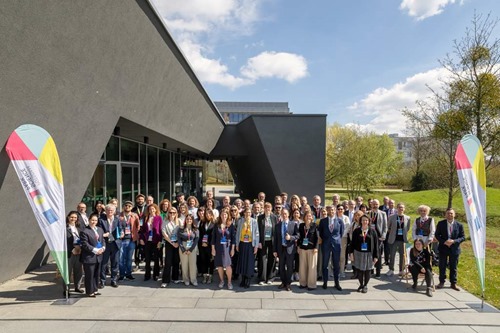
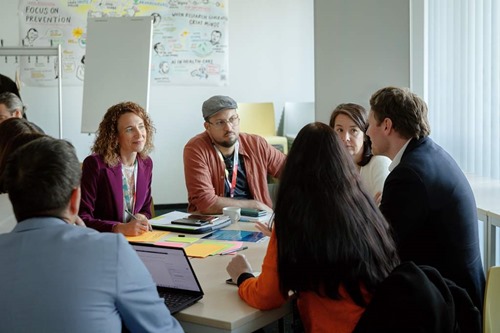
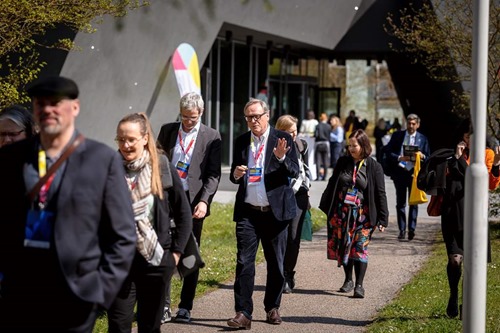
The warm April weather and spring energy saw the celebration of the Potsdam International Forum "Science Parks and Competitiveness: Bridging Regional Growth and European Innovation and Research Policy", held on 15–16 April 2026, which brought together policymakers, innovation leaders and science park practitioners from across Europe to address one of the continent's most pressing challenges: how to translate state-of-the-art research into scalable, regionally anchored innovation. While not an official IASP event, it was great to see so many members (27 members from 19 countries) taking the opportunity to join IASP European Division President and Potsdam Science Park CEO Agnes von Matuschka for the forum.
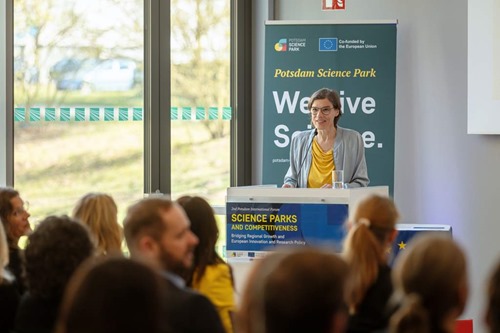
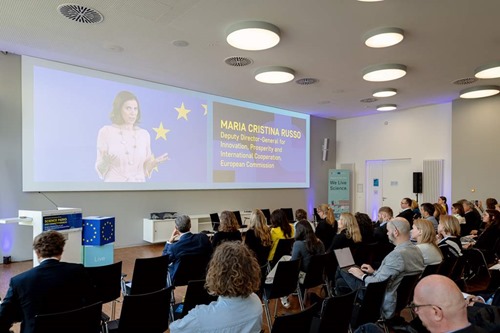
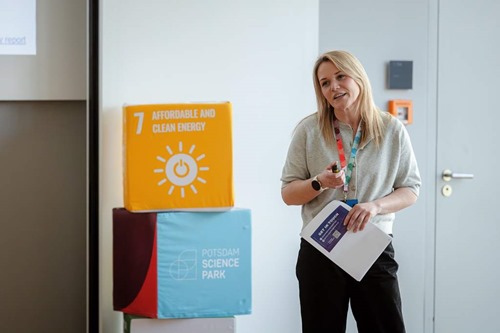
Agnes opened the event, emphasising that science parks and other innovation spaces are key spaces where knowledge transfer, networking, and lasting partnerships take shape. That theme ran through the first day's sessions, featuring speakers from the European Commission, the European Innovation Council and other EU actors. One thing was clear: innovation ecosystems and physical hubs such as science parks are essential for European competitiveness as they bridge the gap between ideas, industry, and academia.
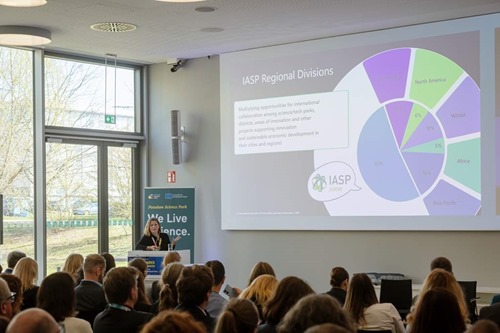
IASP CEO Ebba Lund delivered a keynote on "European Innovation Spaces - IASP Insights", drawing on data from across our European division as well as highlighting priority actions identified in the recently published IASP white paper, deriving from the latest IASP European Division conference hosted by NOI Techpark in 2025. IASP President Salvatore Majorana, CEO of Kilometro Rosso, also addressed the forum, exploring how science parks can serve as connectors of global talent and act as trusted environments for cross-border collaboration. Day one also featured key participation from IASP members Norwich Research Park, Glasgow City Innovation District, and Ostim Teknopark, around the theme of "Co-generating Excellence: Cities and Science Parks for Regional Innovation".
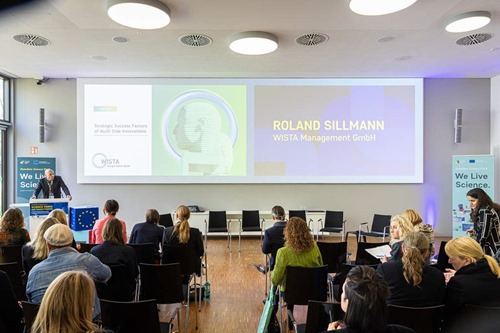
Day two focused on regional models, multi-site ecosystems and the evolving role of science parks as orchestrators of territorial innovation. IASP members Linköping Science Park, Kunnskapsbyen Lillestrøm, and WISTA Management GmbH each drew on their own experience to address regional alignment, resilience and the role of trust and human connection in making collaboration work. The afternoon sessions brought further perspectives from Basque Country Technology Park, NOI Techpark, and Poznań Science and Technology Park on the transition from single-site to networked ecosystems, and the importance of branding and citizen engagement.
The recurring message throughout the forum was that Europe's challenge is not a lack of innovation, but a lack of connection. As Agnes von Matuschka noted in her closing remarks, innovation does not just happen on its own; it requires orchestration. For IASP and its members, this forum (funded by the European Union and the German state of Brandenburg) was both a demonstration of that principle and a call to action.
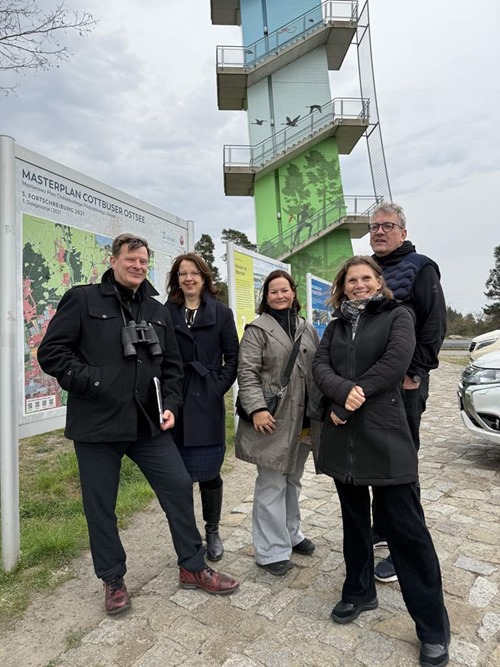
Ahead of the Second Potsdam International Forum, a delegation of IASP members also visited Lausitz Science Park in Cottbus, one of Germany’s science park projects in development. The group included IASP CEO Ebba Lund, who had the opportunity to present IASP, along with Justyna Adamzka from Poznan Science Park, Bernhard Lamprecht and Pamela Kogelnik-Mühlmann of Lakeside Science & Technology Park, among others. The programme offered a rich combination of research excellence and ecosystem insights from a region in transformation, serving as a reminder that some of Europe’s most exciting stories are still being written.
Together, the two experiences offered an illustration of what European Science Parks are capable of when collaboration and vision come together.
__sevensmaltry.jpg)


/canvascolor(0xffffffff)/Untitled_11.jpg)
/canvascolor(0xffffffff)/Captura_de_tela_2025-03-06_122825.png)
/canvascolor(0xffffffff)/2023_10_09_Brazil_PCT_UNICAMP.jpg)
/canvascolor(0xffffffff)/IT_park-01_1.png)
/canvascolor(0xffffffff)/2021_Spain_PCT__lava.png)
/canvascolor(0xffffffff)/2017_11_17_Taiwan_Southern_Taiwan_SP.png)
/canvascolor(0xffffffff)/Andorra_RGB_RI-1_1.png)
/canvascolor(0xffffffff)/2023_06_08_Australia_Melbourne_Innovaiton_District.jpg)
/canvascolor(0xffffffff)/La_Salle_Barcelon_logo.png)
/canvascolor(0xffffffff)/MemberLogo-43501-149701.jpg)
/canvascolor(0xffffffff)/logo-oscuro-parque-cientifico-ua.png.png)
/canvascolor(0xffffffff)/depark-01.png)
/canvascolor(0xffffffff)/logo_TROKUT_Å_ibenik_PNG_2.png)
/canvascolor(0xffffffff)/2021_01_26_Spain_PCT_Gipuzkoa.png)
/canvascolor(0xffffffff)/MemberLogo-41301-6054.gif)
/canvascolor(0xffffffff)/2017_06_19_South_Africa_The_Innovation_Hub.emf.jpg)
/canvascolor(0xffffffff)/Logo_UO_4.jpg)
/canvascolor(0xffffffff)/Tech_Parks_Arizona_1.png)
/canvascolor(0xffffffff)/acronimo_nombre3l_6.jpg)
/canvascolor(0xffffffff)/2021_01_26_Spain_PCT_Bizkaia.png)
/canvascolor(0xffffffff)/Lion_scienc_park_black_trans_3.png)
/canvascolor(0xffffffff)/Logo_ITP-01_1.jpg)
/canvascolor(0xffffffff)/ppnt_logo_EN.png)
/canvascolor(0xffffffff)/logo-eng_4.png)
/canvascolor(0xffffffff)/2020_09_09_Sweden_Luleea_SP.png)
