/)



Peers Around The World: Building Medellín’s innovation ecosystem for inclusive and sustainable growth
/Carlos_Franco_landscape.png)
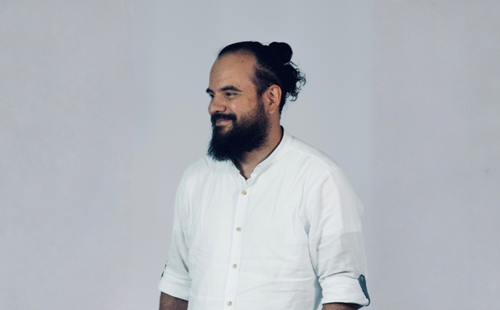
In this month’s edition of our Peers Around the World series, where we hear from leaders in innovation from across our global network, we spoke with Carlos Franco, Deputy director of excellence and sustainability at Ruta N. He shared insights on the Latin American innovation ecosystem, their plans for the Medellín region, as well as his personal experience being part of transformative projects such as FutuMed.
Ruta N has helped to position Medellín as a hub for science, technology and innovation worldwide. Looking ahead, what is the long-term vision for the Innovation District, and how do you expect it to shape the city’s economy and social development in the coming years?
At Ruta N, our long-term vision is centered around a city where quality of life, social progress, environmental responsibility, and economic development reinforce one another. We believe that a strong and sophisticated economy, grounded in technology and powered by the scientific and technological capabilities of our local talent, is fundamental to achieving this vision. This conviction is what guides our work every day.
Looking ahead, we imagine an increasingly modern and connected fabric of businesses, institutions, universities, and social organizations, who share a common understanding that technology is not an end itself, but a mean to expand productive capabilities and to enhance people’s well-being. Together, we form one of Medellín’s greatest assets, the Innovation Ecosystem.
This Ecosystem is structured around a public policy framework and a 10-year Science, Technology and Innovation (STI) strategy that the city has defined collectively. The strategy lays out clear transformation pathways and establishes milestones that guide us toward the fulfillment of four major areas of transformation for Medellín. Through this long-term vision, we expect the Innovation District to drive Medellín toward a more sustainable and environmentally-conscious future, one that embraces ethical digital innovation, and promotes the social and productive adoption of emerging technologies, materializing and articulating local and foreign capabilities for technological development and innovation throughout a unique urban living lab in Latin-America.
Ultimately, this vision supports the creation of sustainable, high-value economic activity and strengthens the collaboration and convergence of our city’s STI actors.
One of the most remarkable shifts in Medellín has been turning policy ideas into tangible territorial interventions. How does Ruta N translate innovation policy into real-world practice - urban renewal, experimentation, and citizen engagement - and what are the main lessons learned from that process?
Medellín’s journey in science, technology, and innovation has been driven by our ability to translate policy into concrete territorial change. Over the past decade, Ruta N has played a central role in turning strategic intent into practical interventions that mobilize organizations and engage citizens in new forms of problem-solving.
The first STI public policy, launched in 2012 with a 10-year horizon, focused on building capabilities in three priority sectors: energy, health, and ICT. Through public investment, along those years, we catalyzed private innovation, supporting more than 4,600 companies and over 500 innovation projects. This effort helped attract more than 480 external companies to establish operations in Medellín, mobilizing and connecting 500 million US$ in venture capital and contributing to the creation of over 25,000 high-quality jobs. These outcomes showed us that policy becomes meaningful when it is tied to experimentation, collaboration, and clear incentives.
Today, the city faces more sophisticated challenges. Our new STI policy and strategic plan, extending to 2035, aims to enable sociotechnical transformations across the territory. To achieve this, we are strengthening the continuum of research, development, and technology deployment while encouraging agents to work across different levels of technological maturity.
A recent example is our 2025 results-based funding scheme, through which we mobilized over 2 million US$ in public investment to drive technological development aligned with the city’s strategic challenges. This mechanism incentivizes startups, research groups, and companies to co-create solutions and receive funding only when specific milestones are achieved. Complementing this, our MedellínVC strategy is helping consolidate the city’s venture capital ecosystem by training and connecting more than 150 emerging investors and family offices, supporting the creation of structured micro-VC vehicles.
As a key lesson, innovation policy becomes transformative when public resources unlock private investment, when incentives reward results, and when the entire ecosystem is mobilized toward shared long-term missions.
Around the world, innovation districts often face tension between urban transformation and preserving cultural identity. How is Medellín navigating this balance, and what do you think sets this city apart from other global innovation centers?
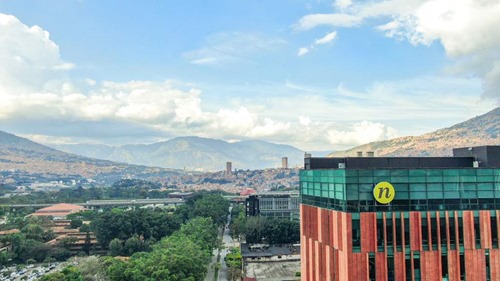
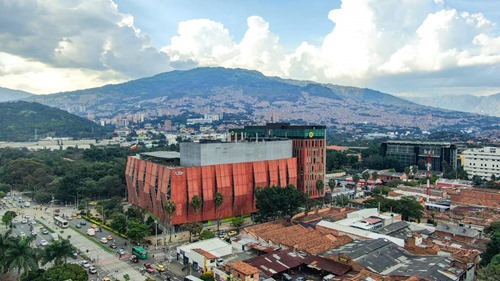
One of our greatest responsibilities and one of our most meaningful challenges, is ensuring that Medellín’s innovation journey strengthens, rather than replaces, the cultural identity of the communities. The Innovation District is located in the north of Medellín, a working-class area that historically served as the gateway to the most densely populated and socially complex zones of the city. It is also a territory marked by profound resilience, during the early 1990s, this area was the epicenter of the violence that made Medellín one of the most dangerous cities in the world.
That history is never forgotten. It serves as a reminder of what must never happen again and as inspiration for what innovation should achieve: opportunities, dignity, and new narratives for the people who live here.
Today, Medellín is navigating the balance between innovation and cultural identity by placing people, especially children and youth, at the center of transformation. Our Generación Tech program works with public-school students aged 9 to 15, as well as their teachers, to spark creativity and technological imagination. Using Challenge-Based Learning, Design Thinking, and gamification, more than 2,000 students tackled local challenges such as mobility, waste management, air quality, and public safety. The program intentionally includes rural zones and strongly promotes gender equity, encouraging girls to see themselves as creators of the city’s future. For 2026, we expect to achieve 5,000 students.
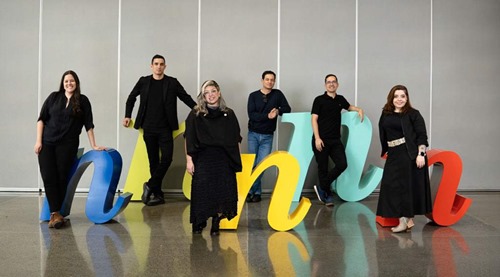
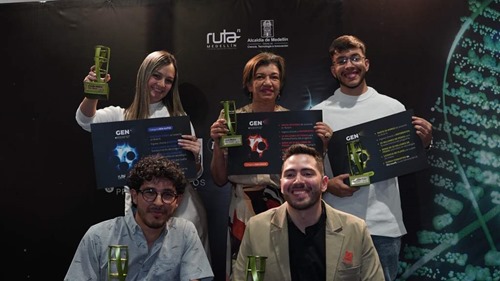
For older youth, Gen N celebrates leadership in science, technology, innovation, and entrepreneurship across six categories. These awards inspire young people, many from vulnerable contexts, to recognize their own agency and shape their communities through knowledge and creativity.
Finally, we work closely with the cultural collectives in the district, inviting them to use Ruta N as a space for gathering, storytelling, and exchange. This reinforces the message that innovation grows from identity.
What sets Medellín apart is precisely this human-centered approach. Our innovation ecosystem is not only about technology and business, it is about people reclaiming their future and transforming their territory with pride, memory, and purpose.
When innovation becomes a tool for inclusion and sustainability, success looks different. What kind of results or impacts tell you that Ruta N is on the right path?
For us at Ruta N, success is not defined only by the number of programs we run or the volume of companies we support, although these are important signals. What truly tells us we are moving in the right direction is whether Medellín is becoming a city where innovation contributes to dignity, opportunities, and long-term sustainability.
Our 2024–2027 strategy outlines measurable goals that guide our work and are aligned with the city’s Development Plan: the number of people we reach, the companies strengthened through our programs, and the venture capital mobilized as a result of our efforts. These metrics help us understand the scope of our interventions.
But above all, one indicator stands out as our most powerful measure of impact: the share of Medellín’s GDP invested in science, technology, and innovation. We refer to this as the ASTI/GDP ratio, and it has been a central metric for us since 2014. Tracking it has required persistence and collaboration, but it remains the clearest reflection of the city’s commitment to building a knowledge-driven economy.
This indicator became especially meaningful after our first Collective Grand Pact for Innovation in 2014, when the private sector voluntary agreed to increase its investment in innovation with the long-term goal of reaching 3% of local GDP. The logic is simple, when a city consistently invests in STI, it strengthens its productive base, creates higher quality jobs, generates greater economic value, and advances toward a more sophisticated and inclusive economy. In other words, it builds and distributes prosperity.
Beyond economic metrics, success also looks like progress on the issues that matter most: improving environmental conditions, fostering access to higher education, and ensuring that innovation addresses real urban challenges. When these pieces move together, a virtuous cycle that has the power to transform Medellín for generations emerges.
Medellín’s story is increasingly international. How do partnerships with global networks, peers and cities shape Ruta N’s agenda, and what can the world learn from Medellín’s experience?
Ruta N is an organization deeply connected to the world, yet eager to strengthen those connections even further. One of our strategic guidelines is to link Medellín’s innovation ecosystem with real global opportunities for growth and collaboration. We look to the world for inspiration and benchmarks, but we also recognize that many peers now look to Medellín as a source of learning and possibility.
Our international engagement follows a structured approach. On one hand, we work to create the right conditions for global organizations to see the opportunities in Medellín to expand, to innovate, and to grow from here. We want them to find in Ruta N and in the city’s institutional fabric true partners, capable of accompanying their long-term ambitions.
At the same time, we encourage local companies to think globally, to position themselves as world-class players, and to pursue international markets with confidence. We support them throughout this journey, helping them build the capabilities and networks they need to compete beyond national borders.
For those who see Medellín as a reference, we openly share our experience and respectfully engage with their own processes. Through knowledge transfer, co-creation, and adaptation, we help other cities and organizations replicate and reimagine programs that have worked in our context.
From our experience, I can highlight four powerful messages. First, the importance of a strong city narrative grounded in resilience and transformation through science, technology, and innovation: 30 years ago we were a failed society, today Medellín is a global reference point. Second, the value of a transparent and sustained public-private dialogue: for over twenty years, Medellín’s University-Industry-Government Committee (CUEE) has aligned academic research, business needs, and local policy in service of shared goals. Third, the clarity and cohesion that a long-term vision provides: Medellín’s multi-decade STI strategies create cohesion among actors and guide collective action, even as political cycles change. And finally, the power of a continuously active, connected, and dynamic innovation ecosystem that keeps generating opportunities for transformation and collective progress.
One of the most recent additions to your ecosystem is FutuMed, a strategically designated geographic area aimed at facilitating the testing and scaling of advanced technologies in real urban conditions. How do you ensure that such technologies are effectively integrated into the city's infrastructure and daily operations post-experimentation?
FutuMed is one of our most strategic initiatives, not only for Ruta N but for the entire City of Medellín. It represents the tangible realization of the Innovation District. A vision we have been building for more than a decade and that has only recently become possible thanks to the public policy instruments now in place to support its development.
Within this framework, Ruta N is responsible for shaping the thematic focus and operational logic of FutuMed. Our role is to design the mechanisms that activate the territory, encouraging experimentation, attracting companies to test technologies in real urban conditions, and supporting the establishment of research, technological development, and innovation operations within the district.
A key mechanism we are using is results-based public funding for technology development and validation. The beneficiated projects are aligned with the city’s strategic challenges, ensuring that experimentation is not isolated, but designed from the outset with future scalability in mind. Successful pilots will be intentionally connected to public procurement pathways, particularly public procurement of innovation, allowing validated technologies to be integrated into the city’s infrastructure and daily operations. Ruta N plays a central role in supporting this transition at the citywide level.
Integration also requires regulatory readiness. For this reason, we work on support companies in understanding existing regulatory frameworks while simultaneously facilitating dialogue between innovators and regulatory authorities. This two-way interaction helps regulators anticipate future needs and ensures that innovation and regulation evolve together, rather than in conflict.
Finally, we view experimentation as a pathway to high-impact, sustainable businesses. Through our acceleration models, we support companies in transforming validated solutions into scalable and commercially viable ventures, capable of growing within Medellín and beyond.
In this way, FutuMed is not only a space for testing technologies; it is a structured pipeline that connects experimentation, governance, market creation, and long-term transformation.
On a more personal note, being part of that transformative project must be both exciting and demanding. What inspires you most about Medellín’s innovation journey, and what keeps you personally motivated in this role? Is there a particular place or experience in the District that resonates with you or sparks your inspiration?
Being part of Ruta N is deeply inspiring, and I have always felt genuinely privileged that this is my job. I am an optimist by conviction, despite some realities. I see technology as a means for human beings to extend their capabilities, helping people achieve personal aspirations while contributing to the well-being of others. For me, innovation only makes sense when it is socially responsible, ethically grounded, and fair to both society and the environment. This is why the social appropriation of science and technology remains one of my strongest beliefs.
Twenty years ago, I worked to bring science closer to children and young people in marginalized neighborhoods of Medellín through gamification. That experience showed me the deep inequalities and significant barriers that people faced to accessing knowledge, culture, entrepreneurial opportunities, and quality employment. The Medellín many of us grew up in was also a highly violent city, and one of the root causes of that violence was structural inequality and the lack of real opportunities. What motivates me most is contributing to the construction of a fair, sophisticated society, without violence, and at peace.
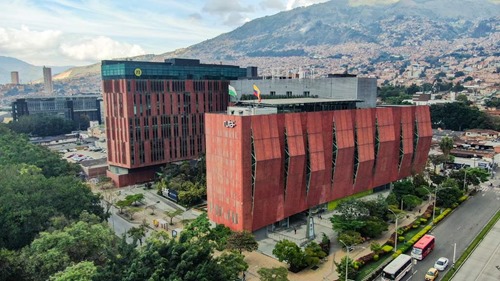
I am absolutely convinced that at Ruta N we are helping to lay foundations for a better society. As a public institution, we work to remove barriers and to mobilize citizens, public and private institutions, companies, and academia to collaborate in building a better city together, and there is one place that is the symbol of what we are doing: the Ruta N Complex itself. Seeing it inhabitants having conversations about technological projects, citizens discovering new technologies, and young people gathering to dream, learn, and build opportunities represents the city we are striving for.
I am also deeply inspired by the opportunity to share our experience to other territories across Latin America. I feel a strong connection to the region and a responsibility to share our experience with humility. It is profoundly meaningful to see cities in Colombia and beyond adapt lessons from Medellín and begin their own paths of transformation. In those moments, innovation becomes more than policy or infrastructure, it becomes shared hope.


/canvascolor(0xffffffff)/WhatsApp_Image_2020-03-12_at_10.51.40.jpg)
/canvascolor(0xffffffff)/2022_05_09_Czech_Republic_Technology_Park_Brno_1.png)
/canvascolor(0xffffffff)/2017_08_04_fundecyt-pctex-h.png)
/canvascolor(0xffffffff)/2017_11_10_Sweden_IDEON_Science_Park.jpg)
/canvascolor(0xffffffff)/Logo_TQ_5.jpg)
/canvascolor(0xffffffff)/2017_11_15_Slovekia_CEPIT.jpg)
/canvascolor(0xffffffff)/2019_10_04_Poland_Poznan_Science_and_Technolog.png)
/canvascolor(0xffffffff)/MemberLogo-25804-6113.jpg)
/canvascolor(0xffffffff)/LOGO-PC-TEC.png)
/canvascolor(0xffffffff)/logo_PIL_h_color.png)
/canvascolor(0xffffffff)/annarbor.png)
/canvascolor(0xffffffff)/2022_10_18_Luxembourg_Technoport.png)
/canvascolor(0xffffffff)/healthcampus_logo_notext_transparant_7.png)
/canvascolor(0xffffffff)/Captura_de_tela_2025-03-06_122825.png)
/canvascolor(0xffffffff)/2025_01_30_The_Netherlands_Noviotech_campus.png)
/canvascolor(0xffffffff)/2026_02_19_Spain_ParcBIT.png)
/canvascolor(0xffffffff)/2023_10_23_Sweden_Sandbacka_SP.jpg)
/canvascolor(0xffffffff)/2023_10_26_Canada_Innovation_Saskatchewan.png)
/canvascolor(0xffffffff)/2017_08_07_HHTP.png)
/canvascolor(0xffffffff)/Logo_TechPark-02_1.png)
/canvascolor(0xffffffff)/V_1.jpg)
/canvascolor(0xffffffff)/UBT1_1.png)
/canvascolor(0xffffffff)/logo_en_UNESCO_2nd_combination.png)
/canvascolor(0xffffffff)/NU_STeP_logo_2.PNG)
/canvascolor(0xffffffff)/2017_07_25_Germany_Technologiepark_Heidelberg.jpg)
