/)



Peers Around the World: Leading through resilience, empowering innovation, and building a global community
/Reem_Philby.png)
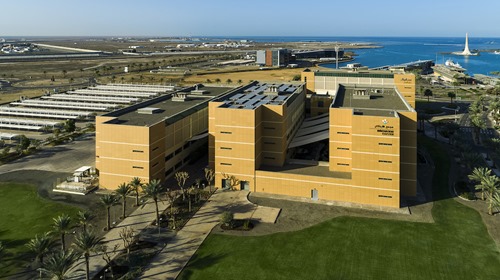
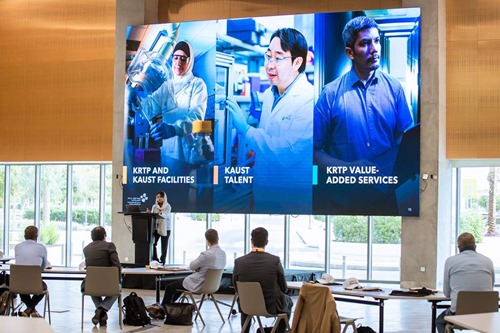
In this month’s edition of our Peers Around the World series, where we hear from leaders in innovation from across our global network, we spoke with Reem Philby, Head at KAUST in Saudi Arabia . She discusses her journey from junior role to becoming Head of the KAUST Research and Technology Park, and how collaboration and entrepreneurship are shaping Saudi Arabia's innovation future.
You have spent 16 years at KAUST in a variety of roles before becoming Head of the Research and Technology Park three years ago. What were the experiences along that journey that most prepared you for the leadership role you hold today?
I started at KAUST in an entry level role and had the opportunity to grow into positions in different departments within the university prior to my current role. From the start, I focused on two main things, taking every opportunity to learn, and fully understanding all aspects of every role I was in. I was also lucky to have had the opportunity to sit in many meetings with the leaders in the organization early on. My role at the time ranged from taking meeting minutes to acting on behalf of my manager and progressed to leading meetings myself. That progression gave me an understanding of how organizations operate at different levels and shaped the leadership approach I use today which is based on active listening, ongoing learning and empowering others.
KAUST's researchers are developing solutions to global challenges in areas such as water conservation, energy efficiency and sustainable food production. How does this contribute to Saudi Arabia's growing role in sustainable innovation?
From the start, KAUST created new initiatives in alignment with national priorities. Vision 2030 became the north star and KAUST efforts fully aligned with it. KAUST’s flexibility and agility along with the creative innovative ways we operate helped make KAUST a leader in innovation on different levels. Additionally, the international community of great academic minds that addressed global challenges early on and the innovative environment along with the available state-of-the-art facilities provided a healthy setup for science and innovation to blend. One more important factor is the solid reputation and connections KAUST invested in building over the years where key players in different sectors address national challenges and KAUST collaborates with them to try to find scientific based solutions. All these factors contribute to the country’s growing role in sustainable innovation and other areas.
The park is home to an international community where people from over 120 nationalities live, work and study together. How has living in such a diverse and globally minded environment shaped your own perspective?
I come from a mixed culture background, so it was only natural for me to seek a place like KAUST to live, work and raise a family. Cultural diversity is more integrated with our nature as humans than we might think. Creating a research park within this community based on its values was an essential decision to ensure the sustainability of the park. One of the main pillars of creating a startup is having a team where every member brings something special and unique to the table, and where experiences blend and result in a thriving business. This requires being open-minded, accepting differences, seeing things from different angles, and being open to learning new ways. All these values come from a mix of cultures and backgrounds and create a solid foundation for businesses and ultimately a mature research park. Successful organizations like the IASP bring global research parks leaders together to connect and learn from each other’s experiences which reflects the significance of cultural integration.
You have spoken about encouraging others, particularly women, to step beyond their comfort zones. How does that philosophy guide the way you support the entrepreneurs and researchers within the park?
Challenges are an inevitable part of being a startup and the reality is many entrepreneurs may understand the concept in theory yet struggle and get stuck when challenges hit. At the KAUST Research and Technology park, we built things from scratch and learned along the way. Terminologies like startups, ecosystem, entrepreneurship and innovation were new to many and we may have provided very generous incentives in the beginning to build that ecosystem in a comfortable way. As the years passed, we understood that the main support we can provide is helping entrepreneurs stand on their own and face the world with our support but their solutions. That requires major stepping out of one’s comfort zone, and that is what makes them resilient and capable of pulling their businesses out of death valleys. Our support as a research park team comes in the form of understanding the challenges the startups go through, providing mentorship, helping them connect with other entities in the ecosystem and opening their minds to possible solutions and different ways of thinking, but not fully solving their problems. It’s like a dance where the rhythm sometimes breaks, but eventually everyone learns the steps and carries on.
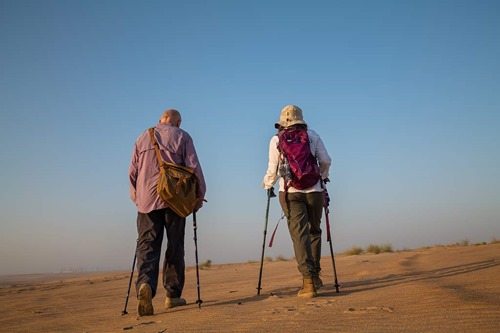
In 2023, you took part in the Heart of Arabia expedition, a coast-to-coast trek across Saudi Arabia that retraced the route that your grandfather, the explorer Harry St. John Philby, travelled over a century ago. What did the experience teach you?
I am an explorer at heart, and the skills I learn from nature, isolation and the outdoors shape my everyday life. This shows in my calm nature, patience, knowing when to take things slowly and when to act fast and take a decision on the spot because the stakes are high, and understanding that in a healthy team, people help each other but also everyone is held accountable and responsible.
Heart of Arabia was special in two ways, one was through my involvement in supporting a KAUST led scientific research on bats which linked two important parts of my life together, and of course for the obvious personal connection. Retracing the journey of my grandfather across my country more than a century later gave me a rare opportunity to experience the landscape and challenges myself. I got to re-live many things he experienced, pass by exact locations that he photographed and meet a few people who knew him and hear their stories. Going back to essentials, slowing down and sharing human stories around a campfire help us regain our balance and recharge, and nothing does that better than the desert.



/canvascolor(0xffffffff)/Durana_Tech_Park_Logo_B_(1)_page-0001_6.jpg)
/canvascolor(0xffffffff)/2025_08_27_Brazil_Sao_Paulo_Innovation_District.jpg)
/canvascolor(0xffffffff)/Logo_Novi.JPG)
/canvascolor(0xffffffff)/buildings2.png)
/canvascolor(0xffffffff)/OPENZONE_1.jpg)
/canvascolor(0xffffffff)/MemberLogo-5557-5966.jpg)
/canvascolor(0xffffffff)/footerLogo_5.png)
/canvascolor(0xffffffff)/2023_10_23_Sweden_Sandbacka_SP.jpg)
/canvascolor(0xffffffff)/2018_09_28_Sweden_Umea_SP_Uminova_Innovation_.png)
/canvascolor(0xffffffff)/DSP_logotyp_svart_png.png)
/canvascolor(0xffffffff)/2019_06_12_Taiwan_Hsinchu_SP.JPG)
/canvascolor(0xffffffff)/2025_03_04_Germany_Ostfalen.png)
/canvascolor(0xffffffff)/Nosp_logo-svart_(2).png)
/canvascolor(0xffffffff)/Untitled_11.jpg)
/canvascolor(0xffffffff)/2017_08_07_Pando.png)
/canvascolor(0xffffffff)/2017_08_04_fundecyt-pctex-h.png)
/canvascolor(0xffffffff)/GITEX_Ehub_Logo_01.png)
/canvascolor(0xffffffff)/Incuba.png)
/canvascolor(0xffffffff)/2020_09_24_Turkey_Teknopark_Istanbul.png)
/canvascolor(0xffffffff)/2023_10_09_Brazil_PCT_UNICAMP.jpg)
/canvascolor(0xffffffff)/2022_06_14_Portugal_UPTEC.png)
/canvascolor(0xffffffff)/Logotipo_Luanda_Tec_Alto.png)
/canvascolor(0xffffffff)/Logo_biopark_200x200_3.jpg)
/canvascolor(0xffffffff)/2025_09_03_New_Zealand_NEXT_Park.png)
/canvascolor(0xffffffff)/2025_09_05_France_Atlanpole.jpg)
