/)



Peers Around the World: Building globally connected innovation communities in Saskatchewan
/Kari_Harvey_Collider_R_T_Park_Saskatoon.jpg)
In this month’s edition of our Peers Around the World series, where we hear from leaders in innovation from across our global network, we spoke with Kari Harey, CEO of Innovation Saskatchewan in Canada. She reflects on how her public service career shapes her approach to leadership and discusses locally driven innovation, international collaboration and the future development of Saskatchewan’s Research and Technology Parks.
With a long trajectory in public service, including senior roles in national and provincial ministries, you've led international trade missions and shaped Saskatchewan's global partnerships. How has this shaped your approach to leading Innovation Saskatchewan today?
Whether in agriculture, health, international relations or the executive offices of government, I learned that meaningful progress happens when you bring the right people together around a shared goal. Leading international trade missions and building partnerships abroad reinforced the importance of relationships, trust and a long-term perspective.
At Innovation Saskatchewan, I apply those same principles every day. Innovation does not happen in isolation. It requires collaboration among researchers, entrepreneurs, investors, governments and industry. My public service background also taught me how to navigate complex systems and align partners around opportunities that create lasting economic impact.
Saskatchewan has world-leading strengths in areas like agriculture, energy, life sciences, mining and critical minerals. My role is to help connect those strengths with opportunities at home and around the world, ensuring innovators have the support they need to commercialise ideas, grow companies and compete globally.
With 25 years of IASP membership behind Innovation Saskatchewan as well as your own personal international background, what are the aspirations for expanding the agency’s global reach or attracting more international partners as the parks evolve?
Our IASP membership has provided an invaluable gateway to a global network of innovation districts, research parks and technology leaders. As our Innovation Saskatchewan R+T Parks evolve, we want to deepen those connections and position Saskatchewan as a destination for organisations looking to collaborate, invest and grow.
What makes Saskatchewan unique is the combination of world-class research capacity, a collaborative innovation community and strengths in sectors that are increasingly important to the global economy. We see significant opportunities to attract international companies seeking expertise in agriculture, food security, sustainable energy, mining, critical minerals and biotechnology.
Our goal is not simply to bring more organisations into the parks. It is to create internationally connected innovation communities where local companies can access global markets and global partners can access Saskatchewan's talent, research infrastructure and entrepreneurial spirit. We want our parks to be places where ideas, people and investment flow in both directions.
Initiatives like the Made in Saskatchewan Technology programme and the Innovation Challenge connect local startups directly with public sector partners to solve community challenges. What role do you think locally driven innovation plays in building a resilient, homegrown ecosystem, and what results have you seen so far?
Locally driven innovation is foundational to a resilient economy. Saskatchewan entrepreneurs understand the challenges facing our communities because they live and work here. Often, they are building solutions based on firsthand experience, which makes those solutions highly relevant and scalable.
Programmes like Made in Saskatchewan (MIST) and the Innovation Challenge help bridge one of the biggest gaps facing early-stage companies: finding that first customer and proving their technology in a real-world environment. By creating opportunities for startups to work directly with public sector partners, we are helping innovators validate their products while also improving services for citizens.
The results have been encouraging. We have seen startups pilot solutions, create jobs, enter new markets and attract additional investment. Just as importantly, these programmes foster a culture of innovation where government becomes a partner in testing and adopting new ideas, helping build a stronger and more self-sustaining ecosystem.
Innovation Saskatchewan is a government agency that owns and manages research and technology parks across two cities, Saskatoon and Regina, each anchored by close partnerships with the University of Saskatchewan, University of Regina, and Saskatchewan Polytechnic. How do you nurture this special collaboration between the public sector, the parks, and their neighbouring institutions?
One of Saskatchewan's greatest advantages is our culture of collaboration. We have strong relationships among government, academia and industry, and because our ecosystem is connected, people are willing to work together to achieve shared outcomes.
Our role is often to act as a convener, bringing partners together around common opportunities. The universities and Saskatchewan Polytechnic contribute talent, research expertise and facilities. Industry brings market knowledge and commercialisation pathways. Government helps create the conditions that support growth and innovation.
The proximity of our research and technology parks strengthens those relationships. It creates opportunities for spontaneous collaboration, knowledge sharing and partnerships that might not happen otherwise. By maintaining open communication, aligning priorities and focusing on tangible outcomes, we can ensure these connections continue to generate economic, social and research benefits for Saskatchewan.
Currently, master plans are being developed for both Research and Technology Parks. When you think about Saskatchewan’s future innovation ecosystem, what do you want these places to become?
I envision our Research and Technology Parks becoming vibrant innovation districts that are recognised nationally and internationally for helping ideas move from discovery to impact.
As we develop the master plans, we are thinking about how the parks can support the evolving needs of innovators over the next 25 years. That includes modern laboratories, flexible workspaces, specialised facilities, collaborative environments and spaces that encourage interaction among researchers, entrepreneurs, students and investors.
But success is about much more than buildings. I want these parks to be communities where talent wants to live and work, where companies choose to invest and where breakthrough ideas can scale into globally competitive businesses.
Ultimately, the parks should reflect Saskatchewan's strengths while helping shape its future, serving as catalysts for economic growth, commercialisation, talent development and international collaboration.
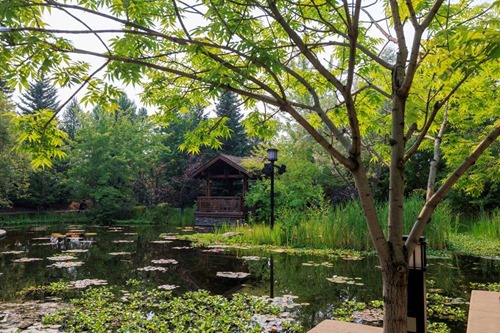
Saskatchewan is known for its prairie landscapes, rich agricultural heritage and strong connection to nature, and the Research and Technology Parks themselves are surrounded by scenic walking trails and green spaces. Is there something about Saskatchewan’s landscape that you particularly value or that helps you switch off?
Absolutely. One of the things I appreciate most about our province is the sense of space. Whether it is walking the South Saskatchewan river trail system along the R+T Park in Saskatoon (Canada's largest urban conservation zone), spending time in Wascana Park next to R+T Park Regina (a park that’s larger than New York's Central Park and Vancouver's Stanley Park combined), or simply watching a prairie sunset, there is something grounding about being surrounded by nature and wide-open skies.
The landscape reminds me to slow down and gain perspective. Innovation can be fast-paced, and leadership often involves managing competing priorities, so having opportunities to step outside and reconnect with nature is important.
I also believe there is a connection between creativity and place. Saskatchewan's landscape encourages reflection and curiosity. It is a province that teaches resilience, adaptability and optimism, qualities that are equally important in innovation.
For me, some of my best thinking happens during a walk outdoors. Saskatchewan's natural beauty provides the perfect environment to recharge and return with fresh ideas and renewed energy.





/canvascolor(0xffffffff)/logo_4.jpg)
/canvascolor(0xffffffff)/KENNISPARK-TWENTE_FC-LOGO-1-800x220_1.png)
/canvascolor(0xffffffff)/Marca_ParqueTeC_Endosso-26_2.jpg)
/canvascolor(0xffffffff)/2020_09_24_Turkey_Teknopark_Istanbul.png)
/canvascolor(0xffffffff)/2018_10_31_Canada_Quebec_International.png)
/canvascolor(0xffffffff)/Yothi_Medical_Innovation_Disctrict.jpg)
/canvascolor(0xffffffff)/2017_10_26_Portugal_Madan_Parque.jpg)
/canvascolor(0xffffffff)/Next_Mannheim_-_Dachmarke_-_RGB_-_final_3.png)
/canvascolor(0xffffffff)/WhatsApp_Image_2024-03-11_at_10.37.06.jpg)
/canvascolor(0xffffffff)/2024_04_04_The_Netherlands_Lindholmen_Science_Park.jpg)
/canvascolor(0xffffffff)/2017_10_31_Spain_Fundacion_Comunitat_Valencian.jpg)
/canvascolor(0xffffffff)/TrentinoSviluppo_orizz_positivo_colori_png.png)
/canvascolor(0xffffffff)/BizMaker_payoff__grey_1.png)
/canvascolor(0xffffffff)/Logo_UO_4.jpg)
/canvascolor(0xffffffff)/LOGO_PNT_EN_pelna_nazwa_(granatowe)_1.png)
/canvascolor(0xffffffff)/2023_10_23_Korea_Pangyo_Techno_Valley.jpg)
/canvascolor(0xffffffff)/IEC_Logo.png)
/canvascolor(0xffffffff)/Identificador_Visual.png)
/canvascolor(0xffffffff)/ParqueTecnologico_1_2_fundoverde_rgb_5.jpg)
/canvascolor(0xffffffff)/2024_09_26_Thailand_Northeastern_2.jpg)
/canvascolor(0xffffffff)/2023_10_26_Canada_Innovation_Saskatchewan.png)
/canvascolor(0xffffffff)/V_1.jpg)
/canvascolor(0xffffffff)/IMG_6669_1.png)
/canvascolor(0xffffffff)/buildings2.png)
/canvascolor(0xffffffff)/2026_07_16_Netherlands_High_Tech_Campus_Eindhoven.png)
