/)



Peers Around the World: Turning science parks into communities
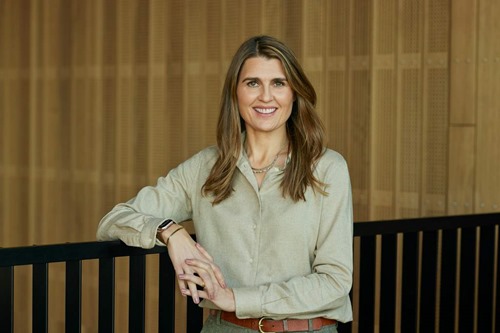
/Visindagardar_Thorey_033.jpg)
In this month’s edition of our Peers Around the World series, where we hear from leaders in innovation from across our global network, we spoke with Thórey Einarsdóttir, CEO of the University of Iceland Science Park. She shared how her background in culture and design has shaped a human-centred approach to science park leadership, focused on creating innovation ecosystems that are both globally connected and deeply rooted in community.
Before moving into science park leadership, you began your career in cultural festivals and creative production, after directing Iceland’s major DesignMarch festival. How has your background across culture, design, and innovation influenced the way you bring people together and work with diverse stakeholders today?
I’ve learned that leadership in complex ecosystems, whether in cultural production or science parks, is essentially an exercise in Design Thinking. In environments where alignment must be earned, I don’t rely on hierarchy. I rely on a human-centered approach to solve problems, by making complex work legible and collaboration frictionless.
My experience in cultural production taught me that nothing moves unless people genuinely believe in the vision. You cannot mandate inspiration, you have to design the conditions for it, and you must allow people to become co-authors of the vision. Today, I apply those same principles to science park leadership. Using empathy, iterative prototyping, and radical collaboration to bridge the gap between disparate worlds. By prioritizing human needs over rigid assumptions, I help different stakeholders find their place in a shared direction, ensuring that even the most complex innovation remains grounded in purpose.
The Science Park’s mission is to bridge academia and industry, turning research excellence into practical outcomes. As CEO of the University of Iceland Science Park, what are your top priorities for strengthening that connection, and how are you working with researchers, startups, and industry partners to achieve shared goals?
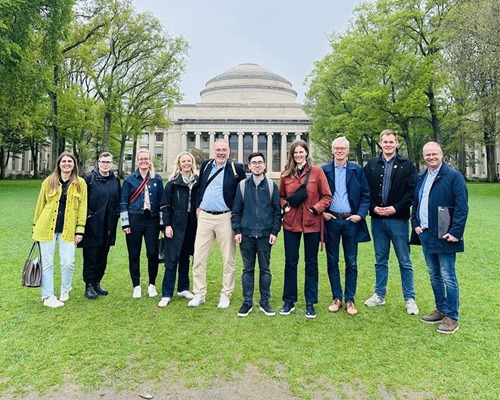
My priority is to transition our ecosystem from reactive to intentional innovation. We recently pressure-tested this through a policy pilot based on MIT Design X ideology, which Dr. Svafa Grönfeldt, Faculty Director of MITdesignX, led. By applying her design-integrated leadership model, we are moving beyond traditional facility management into active ecosystem architecture a space where empathy and iterative prototyping are treated as rigorously as R&D.
Iceland has unique strengths in areas such as renewable energy, climate solutions, space research, and data-intensive technologies. How is the University of Iceland Science Park working to leverage these strengths while ensuring its companies and research remain connected internationally?
Iceland’s strengths give us a real platform on the global stage. Our job is to turn those advantages into international relevance. At the University of Iceland Science Park, we focus on building shared capability locally, facilities, collaboration spaces, and a vibrant community where research can move faster into prototypes, pilots, and products. Internationally, we work deliberately to keep our ecosystem plugged in. We use networks like IASP to connect founders and researchers to peer parks, corporate partners, investors, and programmes abroad. We also design outward-facing activity through joint projects, visiting experts, and targeted delegations.
The goal is practical, teams based in Iceland should develop with international standards, partners, and markets in mind from day one, so our strengths translate into global relevance and export outcomes.
The development of Iceland’s first dedicated deep-tech campus marks an important milestone for the country’s research and innovation community. What does “deep tech” mean to you, and what role do you see this new hub playing in Iceland’s innovation landscape?
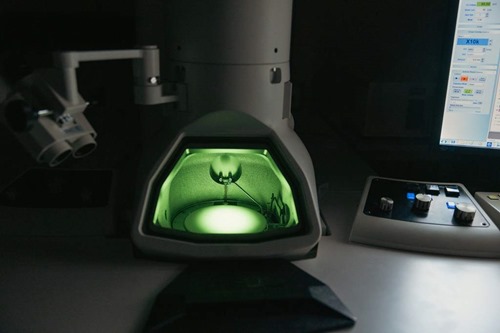
Deep tech, to me, is innovation rooted in breakthrough science and engineering, often IP-driven, technically complex, and slower to mature because it depends on specialist facilities, deep talent and knowledge, validation, and sometimes regulation. It is not incremental software, it is capability-building in areas like advanced energy systems, biotech, advanced materials, sensing and space technologies, and compute-intensive AI.
Iceland’s first dedicated deep-tech campus will become the missing bridge between research excellence and scalable companies. By concentrating first on shared labs and infrastructure, it will reduce the cost and time barriers that deep-tech teams face. I hope to raise the ceiling for Iceland’s innovation economy and help accelerate the creation of export-ready innovation.
Small nations can play a bigger role globally through well-chosen international partnerships. How do you decide which collaborations to prioritise, and what benefits have come from working with international partners in the last three years?
At University of Iceland’s Science Park we prioritise partnerships where three things align: strong fit with our focus areas, clear capability gain, and a realistic route to outcomes. Capability gain can be access to facilities, datasets, testbeds, technical expertise, regulatory pathways, or market channels. Essentially, things that shorten development cycles and reduce risk for our companies. We also value partners that function as “global nodes”, organisations that can open repeated pathways to customers, standards, capital, and talent, not just one-off projects.
Over the last three years, international partners have brought tangible benefits, faster validation through pilots, stronger credibility, and earlier market access, helping Icelandic teams become export-ready sooner. Networks like IASP amplify this by multiplying connections and turning internationalisation into an operating discipline rather than a side activity.
Looking ahead ten years, what would make you feel personally proud about your tenure as CEO, not just in terms of results, but in the people, stories, or cultural changes you helped shape along the way?
Ten years from now, my pride would be found in the culture of sharing we have nurtured. I want this Science Park to be known for its sense of belonging, which is the bedrock of our work—a place where people come to be inspired and to be encouraged to act on their ideas.
In our industry, we often talk about 'clusters,' but I want to talk about community. I'll feel I've succeeded when we hear the stories of the student who finds a life-changing mentor in a chance hallway conversation, or the researcher who feels secure enough to share a failed experiment over coffee. I want the child who visits their parent at work to look around and say, 'I want to be part of this when I grow up.
We aren't just building offices and renting out land. We are lowering the barriers to human connection and creating a role model for what science parks can be, a place that demonstrates how collaboration, trust, and shared purpose can transform not just companies, but entire communities. If we can create a home where every outlier finds their tribe, then we haven't just managed a park—we've built a place where people truly belong and shown others a path worth following.


/canvascolor(0xffffffff)/2017_11_13_Spain_Tecnocampus_3.jpg)
/canvascolor(0xffffffff)/2017_11_10_Turkey_Bilkent_Cyberpark.png)
/canvascolor(0xffffffff)/2022_01_26_Spain_PCT_Tenerife.jpg)
/canvascolor(0xffffffff)/2026_01_16_Lighthouse_logo_coworking.pdf.png)
/canvascolor(0xffffffff)/MemberLogo-29805-71501.jpg)
/canvascolor(0xffffffff)/2019_08_30_UK_Here_East.jpg)
/canvascolor(0xffffffff)/buildings2.png)
/canvascolor(0xffffffff)/2025_03_04_Germany_Ostfalen.png)
/canvascolor(0xffffffff)/2018_08_14_Qatar_Qatar_Science_Park.jpg)
/canvascolor(0xffffffff)/logo_29.jpg)
/canvascolor(0xffffffff)/MemberLogo-5669-6104.jpg)
/canvascolor(0xffffffff)/Foshan_Logo.png)
/canvascolor(0xffffffff)/sip_zurich_rgb_transparent_1.png)
/canvascolor(0xffffffff)/OPENZONE_1.jpg)
/canvascolor(0xffffffff)/MemberLogo-5652-6081.jpg)
/canvascolor(0xffffffff)/MemberLogo-56301-60901.jpg)
/canvascolor(0xffffffff)/VUTSouthernGauteng.png)
/canvascolor(0xffffffff)/TusPark_Belgium.png)
/canvascolor(0xffffffff)/David_Johnston_RTP.jpg)
/canvascolor(0xffffffff)/logo_MHTP_1.png)
/canvascolor(0xffffffff)/MemberLogo-83001-342701.png)
/canvascolor(0xffffffff)/Silicon_Village_Logo_(1)_1.png)
/canvascolor(0xffffffff)/MemberLogo-55602-27601.jpg)
/canvascolor(0xffffffff)/2026_06_22_Brazil_Parque_Tecnol_gico_UFRJ.png)
/canvascolor(0xffffffff)/IMG_6966_1.jpg)
