/)



Peers Around the World: Advancing agri-food innovation through global collaboration
/Karine_Guilbault_portrait.jpg)
In this month’s edition of our Peers Around the World series, where we hear from leaders in innovation from across our global network, we spoke with Karine Guilbault, General Manager of Saint-Hyacinthe Technopole (Canada), who shared insights on the North American innovation ecosystem, Quebec's heritage on agri-food, and the importance of international collaboration.
Saint-Hyacinthe is widely known as Québec’s agri-food capital: a place where science, entrepreneurship, and local identity meet. As General Director of Saint-Hyacinthe Technopole, how do you see the city’s unique industrial and agricultural heritage shaping its future as a centre for innovation and sustainable growth?
In Saint-Hyacinthe, our future is built directly on an exceptional agri-food heritage, which continues to drive our innovation today. As early as the beginning of the 19th century, the Maskoutaine region was recognized as one of Quebec’s most dynamic areas for the production, trade, and exchange of food products. This identity has never disappeared; it has evolved, expanded, and modernized over the decades.
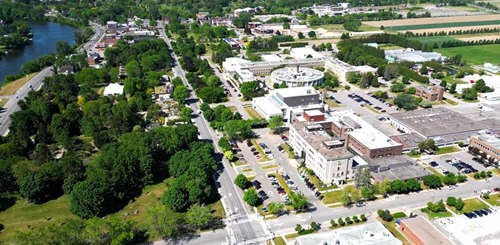
In the 1970s, as the region embarked on an economic transition, we made a strategic decision to build on this heritage and fully embrace the new economy. We shifted from a commodity-based economy to one centered on agri-food innovation, ranging from animal biotechnology to food processing technologies, or “food tech”. This strategic pivot led, in the early 2000s, to the creation of our technology park, the Cité de l’innovation agroalimentaire.
The impact has been significant. For a region of just 92,000 inhabitants, the results are remarkable: over $1.4 billion in investments in less than two decades, the establishment of around forty technology companies, more than 3,000 highly skilled jobs, nearly 200 researchers, and over 20 institutions, centers, and research units gathered on a single site.
Today, nearly two-thirds of private manufacturing investment and almost 60% of new jobs in our region are directly linked to the agri-food sector. This demonstrates that our history is not a fixed legacy; it remains a living platform that enables us to innovate, attract talent, and support sustainable growth.
Your background bridges economic development, business attraction, marketing and innovation strategy. How has this combination influenced the way you lead the Technopole today, especially in translating regional strengths into a globally relevant innovation ecosystem?
Our trajectory as a region and as an organisation has led us to build an agri-food innovation ecosystem whose ambition now extends well beyond local economic development. We structured our science and technology park to support the growth of our territory, while deliberately investing in strong sectorial specialisation and leading-edge expertise capable of addressing the major challenges of the agri-food industry.
Over time, this approach has enabled us to develop an innovation capacity that transcends our borders. The infrastructure, scientific expertise, and networks established here now help accelerate projects, support companies, and strengthen the competitiveness of the agri-food sector across Québec and even beyond. We have evolved from a strictly regional role to an active contributor to the advancement of the entire industry.
This expanded reach has, in turn, had a structuring impact on our own territory. The national and international recognition we have earned by supporting innovation at a broader scale directly enhances our attractiveness, draws in new investments, new talent, and new strategic partners, and fuels a virtuous cycle of local economic growth.
Ultimately, our strategy has always been clear: to become an innovation platform that serves our region while remaining relevant and valuable to the agri-food ecosystem as a whole. This combination of strong local roots, provincial impact, and international visibility is now at the core of how we lead and continue to develop our park.
You are actively engaged in our global innovation community and also recently hosted the IASP North American Division conference. You are also strengthening ties with peers, such as your recent partnership with tecnoPARQ Viçosa in Brazil. What inspired this connection, and how do you envision such cross-border relationships addressing agri-food challenges on a more global scale?
For us, there is no doubt that integration into the international innovation community is essential. By exposing ourselves to best practices, learning from other ecosystems, and building strong relationships abroad, we have been able to internationalize our technology park. Our involvement in IASP has played a key role in this process, and recently hosting the North American Division conference allowed us to strengthen these ties while showcasing our region’s collaborative potential.
In the agri-food sector, many of the challenges we face, as food safety, traceability, technological validation, climate adaptation, transcend borders. These are global, often non-competitive issues for which knowledge-sharing can generate truly mutually beneficial collaborations. When complementary research efforts are brought together or when a technology can be tested in different environments, it opens the door to more robust solutions that can be deployed more quickly.
For several years, our internationalization strategy has relied on building “business bridges” with similar innovation hubs in Europe, Latin America, and elsewhere around the world. This approach has paid off: it has encouraged foreign companies to choose Saint-Hyacinthe as an entry point to the North American market, while also facilitating international access for our own companies with the support of our partners.
Ultimately, these cross-border relationships are not only an asset for our international visibility: they tangibly strengthen our collective capacity to address major agri-food challenges while supporting the growth, attractiveness, and competitiveness of our region.
The agri-food industry is undergoing profound transformation, from sustainable production and circular economy models to digitalisation and food security. How is Saint-Hyacinthe Technopole helping local enterprises and research partners navigate these shifts, and what emerging technologies or projects excite you the most?
The agri-food industry is indeed undergoing a major transformation, and at Saint-Hyacinthe Technopole, our role is to help companies adapt while seizing emerging opportunities. Until recently, our activities were primarily focused on animating and developing the ecosystem, as well as supporting businesses in their growth. Innovation support came mainly from the research centers and technology transfer institutions within the territory.
With the acceleration of changes it has become essential to offer more integrated and accessible support. Entrepreneurs have expressed the need for a single entry point and more direct guidance through sometimes complex processes. This is why we are establishing a new team of innovation advisors. Their mandate is to guide companies through all available services, simplify their journey, and provide direct support on specific technological aspects. In other words, they are unifying the ecosystem’s offerings to create a coherent, impact-oriented point of access.
Among the technologies that excite us, artificial intelligence applied to agri-food, advanced bioprocesses, and precision fermentation stand out for their transformative potential, both for established companies and for start-ups.
All of this is part of a clear vision: positioning Saint-Hyacinthe as a global leader around the concept of One Health, which highlights the interdependence between animal, human, and environmental health. This orientation guides the development of the technologies, collaborations, and infrastructures we deploy.
Innovation in a regional context often depends on nurturing trust and shared ambition among universities, entrepreneurs, and municipalities. What does collaboration look like in your ecosystem?
Collaboration lies at the heart of our ecosystem. While Saint-Hyacinthe Technopole manages its operations, the creation of the technology park, the Cité de l’innovation agroalimentaire, was driven by the collective commitment of local research and higher education institutions. It is this active involvement of multiple partners that has helped foster a shared vision and strengthen a strong culture of collaboration.
Our governance reflects this approach. The board of directors includes representatives from all sectors of civil society: industry, academic institutions, municipalities, finance, and even tourism. This provides us with a 360-degree perspective on the development of our ecosystem. The board is complemented by an advisory committee made up of leaders from the agri-food sector, both locally and elsewhere in Québec, who understand Saint-Hyacinthe’s strategic role in advancing the national industry.
This model is not unique to us, but it allows us to remain closely aligned with the needs of the industry and to go beyond a purely local economic development logic. It demonstrates that mobilization and a shared vision are possible when ecosystem development is based on a structured, relevant model that is aligned with the sector’s needs and delivers tangible value to all its stakeholders.
Looking ahead, what are your priorities for the next phase of Saint-Hyacinthe Technopole’s development? How do you see the balance between local impact, supporting businesses and jobs, and positioning the city as a reference point for agri-food innovation internationally?
Our priorities for the next phase of development at Saint-Hyacinthe Technopole are focused on strengthening the ecosystem and providing direct support to innovative companies. A few years ago, an international benchmark commissioned by the European Commission assessed our ecosystem as “mature”, corresponding to the penultimate stage of the five phases of cluster development and maturity. While this level of maturity is excellent news, it can sometimes make the innovation pathway for our companies more complex, given the segmented nature of services within our territory and across the broader agri-food sector.
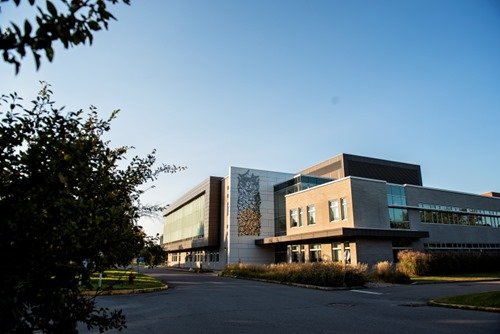
To address this challenge, we are introducing new frontline services for innovative companies, as previously mentioned. Central to this approach is the creation of an Innovation and Entrepreneurship Centre. This centre will serve as the ecosystem’s “central hub”, providing a collaborative space for co-creation, prototyping, pilot testing, and knowledge transfer, where companies can test and develop their innovations.
We expect this project to enhance innovation capacity, optimize the use of existing infrastructure, break down silos between areas of expertise, and foster the emergence of strategic partnerships, while reducing the time to market for agri-food innovations through integrated support along the entire continuum.
This project will help consolidate our ambition to make Saint-Hyacinthe a hub of national expertise and, to some extent, international recognition in agri-food innovation.





/canvascolor(0xffffffff)/WhatsApp_Image_2020-03-12_at_10.51.40.jpg)
/canvascolor(0xffffffff)/2022_05_09_Czech_Republic_Technology_Park_Brno_1.png)
/canvascolor(0xffffffff)/2017_08_04_fundecyt-pctex-h.png)
/canvascolor(0xffffffff)/2017_11_10_Sweden_IDEON_Science_Park.jpg)
/canvascolor(0xffffffff)/Logo_TQ_5.jpg)
/canvascolor(0xffffffff)/2017_11_15_Slovekia_CEPIT.jpg)
/canvascolor(0xffffffff)/2019_10_04_Poland_Poznan_Science_and_Technolog.png)
/canvascolor(0xffffffff)/MemberLogo-25804-6113.jpg)
/canvascolor(0xffffffff)/LOGO-PC-TEC.png)
/canvascolor(0xffffffff)/logo_PIL_h_color.png)
/canvascolor(0xffffffff)/annarbor.png)
/canvascolor(0xffffffff)/2022_10_18_Luxembourg_Technoport.png)
/canvascolor(0xffffffff)/healthcampus_logo_notext_transparant_7.png)
/canvascolor(0xffffffff)/Captura_de_tela_2025-03-06_122825.png)
/canvascolor(0xffffffff)/2025_01_30_The_Netherlands_Noviotech_campus.png)
/canvascolor(0xffffffff)/2026_02_19_Spain_ParcBIT.png)
/canvascolor(0xffffffff)/2023_10_23_Sweden_Sandbacka_SP.jpg)
/canvascolor(0xffffffff)/2023_10_26_Canada_Innovation_Saskatchewan.png)
/canvascolor(0xffffffff)/2017_08_07_HHTP.png)
/canvascolor(0xffffffff)/Logo_TechPark-02_1.png)
/canvascolor(0xffffffff)/V_1.jpg)
/canvascolor(0xffffffff)/UBT1_1.png)
/canvascolor(0xffffffff)/logo_en_UNESCO_2nd_combination.png)
/canvascolor(0xffffffff)/NU_STeP_logo_2.PNG)
/canvascolor(0xffffffff)/2017_07_25_Germany_Technologiepark_Heidelberg.jpg)
