/)



Peers Around the World: Innovation, sustainability, and the human side of science park leadership
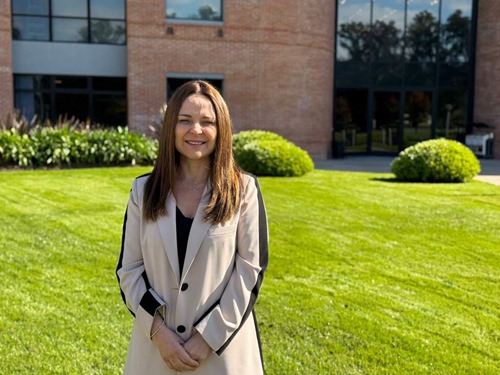
/Silvina_Terroni.jpg)
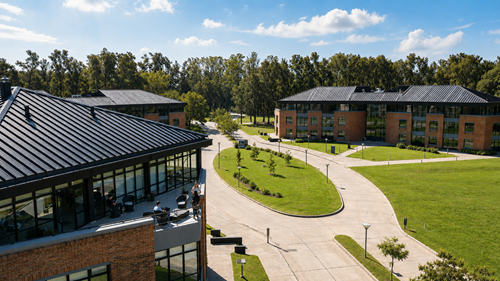
In this month’s edition of our Peers Around the World series, where we hear from leaders in innovation from across our global network, we spoke with Silvina Terroni, Executive Director at Parque Austral in Argentina. She shared her journey from real estate and finance to leading one of Latin America´s most integrated private innovation ecosystems, how the park's unique ties to academia and healthcare shape its culture, and how they took on a comprehensive sustainability transformation.
You have over 25 years of executive experience across sectors such as real estate, finance, and asset management. How has this multidisciplinary background shaped your strategic approach to leading Parque Austral over the past decade?
My multidisciplinary background has allowed me to understand that innovation ecosystems need to combine institutional vision with long-term economic sustainability. Innovation requires talent, research, and infrastructure, but also solid management models capable of sustaining growth, attracting investment, and generating value for all stakeholders involved.
My experience in real estate, finance, and asset management provides a strong focus on building economically viable models capable of supporting ecosystem development while maintaining long-term sustainability. I believe one of the major challenges faced by many science and technology parks worldwide is finding the right balance between impact, innovation, and financial sustainability.
At Parque Austral, we work precisely with that vision in mind, developing a collaborative and innovative ecosystem supported by professional management, long-term planning, and the ability to create value for institutions, companies, and investors involved in these types of projects.
Today, science and technology parks play an increasingly important role as connectors between knowledge and business, helping transform scientific, technological, and academic capabilities into innovation with real impact.
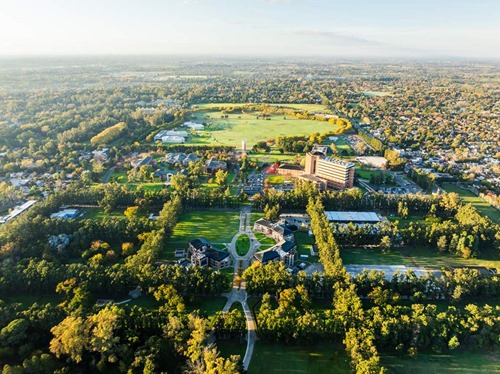
Parque Austral has strong ties to the area’s universities, with Universidad Austral, the IAE Business School, and Austral University Hospital right on the same campus. From your perspective, what does this close university-industry collaboration actually look like in practice?
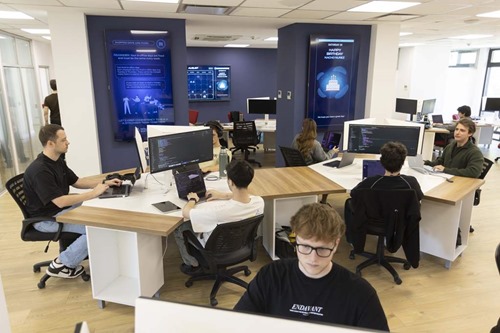
Today, innovation no longer happens in isolation. The most dynamic ecosystems operate as interconnected, multi-stakeholder models where universities, companies, entrepreneurs, healthcare institutions, and investors collaborate continuously. At Parque Austral, we experience this every day.
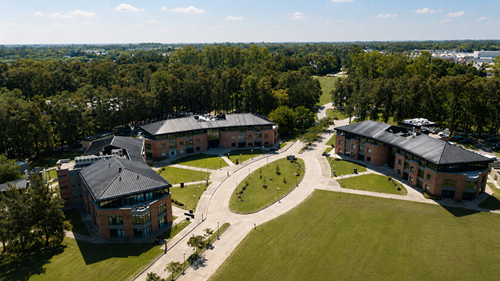
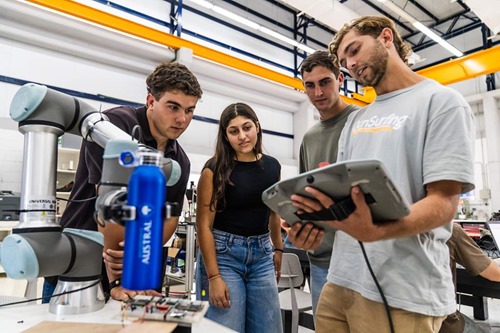
The coexistence of Universidad Austral, IAE Business School, Hospital Universitario Austral, and the companies located within the campus creates an environment where knowledge, talent, and real market needs connect naturally. The university contributes research, education, and talent, while companies bring concrete challenges and execution capabilities, and the ecosystem facilitates those connections.
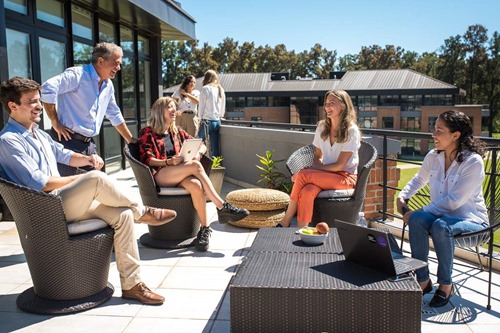
This physical proximity greatly accelerates collaboration processes. Many opportunities emerge from everyday interactions among researchers, entrepreneurs, physicians, executives, and students who share the same environment. It is in this context that new ideas, joint projects, and knowledge transfer dynamics begin to develop.
I strongly believe in what some experts call the “co-industry”: collaboration, cooperation, co-creation, and co-development. Many of the best opportunities emerge precisely from these ongoing interactions between stakeholders who share both a common environment and a long-term vision.
When there is aligned public sector support that recognizes the strategic value of these ecosystems and actively fosters their development, their economic, social, and innovation impact can multiply significantly.
Parque Austral is privately owned. How does that ownership model shape the park's culture as well as your decision-making?
The private ownership model gives Parque Austral a very valuable combination of agility, entrepreneurial culture, and long-term vision. It constantly challenges us to evolve, adapt, and generate real value so the ecosystem can grow sustainably over time.
This directly impacts the way we manage and make decisions. We need to quickly understand how industries such as technology, healthcare, biotechnology, and the knowledge economy are evolving in order to support those transformations and create new opportunities for the companies and entrepreneurs within the ecosystem.
At the same time, we have always understood that a park is not built solely through infrastructure. The most important aspect is creating an environment where people want to collaborate, innovate, and develop purpose-driven projects. It is in this context that the integration with Universidad Austral, IAE Business School, and Hospital Austral becomes extremely valuable, because it connects talent, research, education, and real market needs within the same environment.
The strongest ecosystems are those capable of combining sustainability, community, and multi-stakeholder collaboration. And when those connections work effectively, the economic, human, and innovation impact grows exponentially.
Parque Austral recently signed a framework collaboration agreement with another IASP member, Buenos Aires Innovation Park. In your view, how will this partnership help strengthen the innovation ecosystem in Argentina?
Argentina has tremendous talent, entrepreneurial capacity, and human capital, but ecosystems often operate in a fragmented way. One of the country’s major challenges is precisely improving those connections and building more integrated collaboration networks.
The alliance between Parque Austral and Buenos Aires Innovation Park aims to address that challenge by combining strengths and fostering a more collaborative approach between ecosystems that share a long-term vision for innovation and development.
Parque Austral contributes to strong integration between academia, healthcare, research, and business. Buenos Aires Innovation Park, meanwhile, brings a very interesting urban, technological, and public-private collaboration dynamic. I believe this complementarity can generate joint programmes, international connections, startup initiatives, and new opportunities for entrepreneurs, researchers, and companies.
Today, innovation is increasingly operating as a network. No ecosystem grows in isolation. The more we cooperate, share knowledge, and create valuable connections, the greater Argentina’s capacity will be to develop innovation, attract investment, and become more competitive within the knowledge economy.
Last year, Parque Austral began to operate entirely on renewable energy, alongside measuring its carbon footprint for the first time as part of a broader environmental strategy. What did it take to make this happen operationally, and what would you recommend to any other science parks looking to do the same?
This was a very important step because it transformed sustainability into a concrete management decision. Measuring our carbon footprint under the GHG Protocol methodology helped us map emissions, identify where the main impacts were located, and create a solid baseline for future ESG-related decisions.
Operationally, it required organizing processes, collecting information, involving different areas of the park, and working with clearer metrics. It also involved assigning responsibilities, training teams, and building an ongoing monitoring framework around environmental indicators and objectives.
At the same time, we transitioned toward a 100% renewable energy matrix, a decision aligned with our long-term vision and our commitment to building a more sustainable ecosystem. Beyond the positive environmental impact, this shift also generated efficiencies and operational savings, demonstrating that sustainability and competitiveness can move forward together.
If I had to share recommendations with other science parks, I would say the most important thing is to start with a clear roadmap and concrete objectives. Measuring before acting is essential to understand where the greatest opportunities for improvement lie and to define real priorities.
Another important lesson was prioritizing efficiency before compensation, as optimizing consumption, processes, and infrastructure can generate very significant impact. At the same time, involving companies, suppliers, and ecosystem users can help transform sustainability into a collective effort rather than merely an institutional initiative.
Finally, I believe transparency, continuous monitoring of indicators, and ongoing training are essential to sustaining these types of processes over time. In the end, there is one very simple idea that summarizes everything: what is not measured cannot be improved. The key is to take the first step.
Ten years into your role as Executive Director, what are you most proud of?
After these ten years, what makes me most proud is not so much the infrastructure or the indicators, but rather the people, the culture, and the community we have built at Parque Austral.
I feel especially proud of the Parque Austral team; people with strong values, commitment, a service-oriented mindset, and a genuine desire to do things well. Our team is highly focused on building a strong and sustainable ecosystem, understanding that for an innovation park to succeed, it must generate value for all stakeholders involved: companies, universities, entrepreneurs, investors, and the broader community.
I believe that over the years we have built very valuable foundations and a clear identity regarding the type of ecosystem we want to develop. But we are also very aware that this is an ongoing process of continuous construction. Innovation ecosystems are never truly finished as they are constantly evolving and require strengthening relationships, fostering collaboration, and adapting to new challenges.
I believe the most resilient ecosystems in the world share one thing in common: they are built on trust-based relationships, shared vision, and committed people. And that is probably what I value most about this journey.


/canvascolor(0xffffffff)/2024_12_10_Canada_Entreprendre_Sherbrooke_Logo.png)
/canvascolor(0xffffffff)/2022_01_26_Spain_PCT_Tenerife.jpg)
/canvascolor(0xffffffff)/VUTSouthernGauteng.png)
/canvascolor(0xffffffff)/2025_08_22_USA_VISTA.png)
/canvascolor(0xffffffff)/ZGC_Group_SP_logo_1.png)
/canvascolor(0xffffffff)/2022_11_11_Thailand_Prince_of_Songkla_University_SP.jpg)
/canvascolor(0xffffffff)/2024_05_28_Spain_Fundac_on_PTS_Granada.jpg)
/canvascolor(0xffffffff)/buildings2.png)
/canvascolor(0xffffffff)/2019_06_12_Taiwan_Hsinchu_SP.JPG)
/canvascolor(0xffffffff)/SSTP_Logo_New_-_02.png)
/canvascolor(0xffffffff)/OPENZONE_1.jpg)
/canvascolor(0xffffffff)/ppnt_logo_EN.png)
/canvascolor(0xffffffff)/2017_07_31_PITA.jpg)
/canvascolor(0xffffffff)/2019_10_04_Poland_Poznan_Science_and_Technolog.png)
/canvascolor(0xffffffff)/QU_LOGO.png)
/canvascolor(0xffffffff)/Logo_22.png)
/canvascolor(0xffffffff)/cc-rgb-blackFullS_2.jpg)
/canvascolor(0xffffffff)/Logo_biopark_200x200_3.jpg)
/canvascolor(0xffffffff)/MemberLogo-87901-361401.png)
/canvascolor(0xffffffff)/NSTP_Logo-1_(002).png)
/canvascolor(0xffffffff)/_______logo.png)
/canvascolor(0xffffffff)/2023_01_27_Lithuania_Tech_Park_Kaunas.png)
/canvascolor(0xffffffff)/2025_09_04_Malaysia_MRANTI.jpg)
/canvascolor(0xffffffff)/logo_pcb_2.jpg)
/canvascolor(0xffffffff)/MemberLogo-75801-6122.jpg)
