/)



Peers Around the World: Connecting research with global markets and innovation
/Picture__President_Hee-Kwon_Jeong.jpg)
Before becoming President of INNOPOLIS in 2024, you built an extensive career in science and technology policy and international cooperation. Looking back, which experiences have had the greatest influence on your leadership and vision for INNOPOLIS today?
Over the past 30 years, I have worked at the Ministry of Science and ICT, developing and implementing policies ranging from basic science to industry-academia-research collaboration and national science and technology strategies.
Two experiences have had the greatest influence on my leadership and vision: developing national strategic technology policies and working on international cooperation.
When we developed Korea’s 12 National Strategic Technologies, including AI, semiconductors, and advanced biotechnology, I focused on two key questions: How can we develop these critical deep-tech capabilities, and how can we connect research outcomes to industry and the market?
Through my international cooperation work, I also had the opportunity to see innovation policies and ecosystems in different countries. I learned that while systems and environments may differ, the goal is the same: to turn research into real-world value and help companies grow.
The most important lesson I have learned is that good technology and good policy alone do not create innovation. We need consistent policies and a strong innovation ecosystem that can turn research into commercialization and business growth.
That is the direction I am pursuing at INNOPOLIS today. After spending my career developing science and technology policies, I now have the opportunity to put those ideas into practice by leading an innovation ecosystem.
My role is not simply to make good policies, but to make them work on the ground; connecting research with business, markets, and company growth. That is what I believe INNOPOLIS should do, and it is at the heart of my leadership.
You also spent part of your academic career in the United States. How has your experience studying there shaped your perspective on innovation and international collaboration? In what ways has it influenced your approach to strengthening INNOPOLIS's collaboration with the US?
Studying in the United States was an important turning point that broadened my global perspective.
I studied and conducted research with my advisor and with students from many different countries. We had many intense discussions, challenged each other’s views, and worked toward a common understanding despite our differences. At the time, I saw this simply as a new academic experience. Looking back, however, it taught me an important lesson: recognising different perspectives and finding common ground is the foundation of global cooperation.
This experience has strongly influenced the way I approach science and technology policy and international cooperation. Countries may have different systems, environments, and strengths, but the essence of cooperation is the same: connecting those strengths to create new opportunities and value together.
That is why I do not see international cooperation simply as exchanges or institutional agreements. I see it as connecting different innovation ecosystems and combining their strengths to create something new.
With this perspective, INNOPOLIS is expanding its partnerships not only with the United States, but also with innovation ecosystems across Europe, Asia, and beyond. Our goal is to build an open, global innovation ecosystem where Korean research and technologies can connect with global markets and create real opportunities.
International collaboration has been a defining theme throughout your career. Based on your experience, what does meaningful international collaboration look like for an innovation ecosystem such as INNOPOLIS?
To me, meaningful international cooperation means connecting different innovation ecosystems so that research, technologies, companies, investment, and markets can grow together across borders.
This is especially important for deep-tech companies seeking to enter global markets. No company can have every capability it needs at home. By connecting with overseas research institutes, companies, investors, and potential customers, we can complement our strengths and create new opportunities for commercialization.
At the same time, international cooperation is not only about helping Korean companies go abroad. It is equally important to create an environment where excellent international companies and research institutions can come to Korea and grow together with our universities, research institutes, and companies. True international cooperation should create mutual value and growth.
At INNOPOLIS, we are pursuing this approach through programs such as the Global Boost-Up Project and partnerships with international innovation clusters. We support Korean companies in conducting overseas PoCs, finding local partners, investors, and customers, and entering global markets. We also use our global networks in the United States, Europe, and Asia to support companies with investment, local incorporation, and soft landing.
Ultimately, our goal is to build a global innovation network where innovation players in Korea and abroad can connect, collaborate, and create new technologies and business opportunities together. Through this network, we want Korean technologies and companies to grow in global markets, while bringing global innovation capabilities and opportunities back into the Korean ecosystem.
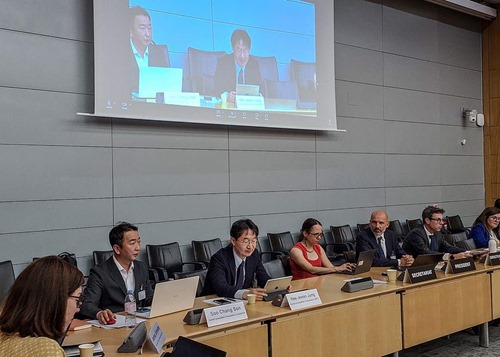
The INNOPOLIS model was recently featured in a special session at the OECD TIP Conference as an international best practice case study of South Korea's innovation ecosystem. Why do you think the OECD chose to highlight the INNOPOLIS model, and what distinguishes it from other innovation ecosystems?
I believe the OECD has taken a strong interest in INNOPOLIS because it sees it not simply as a research complex, but as a leading Korean model for turning research into commercialization and innovation.
Daedeok INNOPOLIS, for example, brings together 27 government-funded research institutes and seven universities, making it Korea’s largest R&D cluster. But its real strength is not simply the scale of its research capacity. It is the innovation ecosystem that connects research to technology transfer, startups, investment, and business growth.
I see three key factors behind the success of INNOPOLIS.
First, consistent national innovation policy. INNOPOLIS has developed continuously for more than 50 years under a long-term national policy framework, rather than through short-term projects.
Second, the connection between the national and regional innovation systems. The research capabilities of government-funded institutes and universities are connected to local industries and the needs of companies.
Third, an end-to-end commercialization support system. From identifying promising research and transferring technologies to launching research-based companies, providing investment, and supporting global expansion, INNOPOLIS supports companies throughout their growth journey.
What makes INNOPOLIS different is that these elements are not working separately. They are connected within one ecosystem, creating a pathway from research to technology, from technology to business, and ultimately to global markets. I believe this integrated ecosystem is one of the most important strengths of the INNOPOLIS model.
Deep-tech companies often face long development cycles, high risks and the challenge of crossing the "Valley of Death" before reaching commercialisation. How does INNOPOLIS help these companies overcome these challenges and successfully bring their technologies to market?
I believe that for deep-tech companies to overcome the “valley of death” and establish themselves in the market, capital and a strong support system are just as important as technology.
Deep-tech companies often face long development cycles and high levels of technological uncertainty. That is why they need patient capital: investment that looks beyond short-term returns and supports long-term growth.
INNOPOLIS has been expanding this type of long-term technology financing through its specialized funds. We are also working to develop longer-term funds that can better support the extended growth cycle of deep-tech companies.
At the same time, we provide end-to-end support tailored to each company’s technology and stage of growth, from technology transfer and the creation of research-based companies to investment, global PoCs, and overseas expansion. Our goal is to create an ecosystem where excellent technologies from research institutes and universities can translate into successful businesses and growing companies.
Ultimately, I believe the role of INNOPOLIS is not simply to keep supporting companies, but to create the environment and opportunities they need to become self-sustaining. We want companies to use the resources and connections within the INNOPOLIS ecosystem to overcome the valley of death and achieve sustainable growth in the market.
Looking back on your time at INNOPOLIS, could you share a success story in deep-tech commercialization - such as AI, biotech, or aerospace - that you are most proud of, and what was the most valuable lesson you learned as President through that experience?
I am most proud that INNOPOLIS is building a world-class innovation ecosystem, creating first-in-class technologies and helping companies become global leaders.
A great example is Rainbow Robotics, which developed Korea’s first humanoid robot, HUBO. The company grew from research at KAIST and further developed the technology into globally competitive robotics capabilities. It later successfully listed on KOSDAQ, Korea’s technology-focused stock market.
In the biotech sector, Cureverse is another good example. The company started as a research-based spin-off company built on research from government-funded research institutes. Through INNOPOLIS’s Global Boost-Up programme, it expanded cooperation with global pharmaceutical companies and signed a major technology transfer agreement with an Italian pharmaceutical company.
These cases show that the strength of INNOPOLIS is not simply in technology transfer or supporting startups. It is about connecting research to investment, commercialization, and ultimately global markets.
In fact, seven of the top ten companies by market capitalization on KOSDAQ have grown within the INNOPOLIS ecosystem. I believe this is strong evidence of the competitiveness of our innovation ecosystem.
Ultimately, the role of an innovation ecosystem is not to create success on behalf of companies.
It is to connect the right resources and opportunities so that research can reach the market and companies can grow on their own.
Looking ahead 10 years, what role do you expect INNOPOLIS to play in the global innovation ecosystem, and what kind of organisation do you hope the INNOPOLIS will become under your leadership?
I believe over the next ten years, INNOPOLIS should move beyond being Korea’s leading innovation cluster and become a global innovation platform where innovation continues to generate new innovation.
Over the past 50 years, INNOPOLIS has built strong research capabilities, infrastructure, and a world-class technology commercialization ecosystem. Building on this foundation, we now want to develop a more self-sustaining ecosystem; where successful technology-based companies generate new technologies, talent, and experience that lead to the next generation of startups.
We are already seeing this cycle in the biotech sector. Researchers from universities and research institutes have founded companies, and some of the talented people from those companies are now creating new ventures of their own. This shows that one research achievement can lead not to just one company, but to a new generation of technologies and businesses.
Our goal is to take this cycle global. We want INNOPOLIS to connect Korea’s research and deep-tech companies with global technology, talent, capital, and markets, creating an ecosystem where innovation crosses borders and generates new innovation.
Ultimately, I believe the true value of innovation is not simply creating one successful technology or company. It is creating an ecosystem where one success becomes the foundation for the next.
When research leads to commercialization, successful companies create new technologies and ventures, and that cycle continues, innovation becomes more than a one-time achievement - it becomes a sustainable source of competitiveness. That is the kind of global innovation ecosystem we want to build at INNOPOLIS.




/canvascolor(0xffffffff)/2022_11_11_Thailand_Prince_of_Songkla_University_SP.jpg)
/canvascolor(0xffffffff)/logo_TROKUT_Å_ibenik_PNG_2.png)
/canvascolor(0xffffffff)/NU_STeP_logo_2.PNG)
/canvascolor(0xffffffff)/2023_01_27_Lithuania_Tech_Park_Kaunas.png)
/canvascolor(0xffffffff)/2020_10_23_Spain_Malaga_TechPark_PTA.jpg)
/canvascolor(0xffffffff)/DSP_logotyp_svart_png.png)
/canvascolor(0xffffffff)/PNU_logo_7.png)
/canvascolor(0xffffffff)/2025_02_18_China_Nanjing_Gulou_Hi-Tech_Industrial_Devt_Zone.png)
/canvascolor(0xffffffff)/2026_02_19_Spain_ParcBIT.png)
/canvascolor(0xffffffff)/Ekran_g_r_nt_s__2026-04-27_162241.png)
/canvascolor(0xffffffff)/Logo_ZEDE_Color_1.jpg)
/canvascolor(0xffffffff)/ppnt_logo_EN.png)
/canvascolor(0xffffffff)/2018_01_24_Italy_Kilometro_Rosso.png)
/canvascolor(0xffffffff)/MemberLogo-5701-6142.jpg)
/canvascolor(0xffffffff)/gcid-logo_logo-colour_for_web_with_20__2.jpg)
/canvascolor(0xffffffff)/Captura_de_tela_2025-03-06_122825.png)
/canvascolor(0xffffffff)/2023_10_23_Korea_Pangyo_Techno_Valley.jpg)
/canvascolor(0xffffffff)/buildings2.png)
/canvascolor(0xffffffff)/IT_park-01_1.png)
/canvascolor(0xffffffff)/2017_07_31_University_of_Iceland.jpg)
/canvascolor(0xffffffff)/UBT1_1.png)
/canvascolor(0xffffffff)/MemberLogo-89401-462801.jpg)
/canvascolor(0xffffffff)/2024_12_10_Canada_Entreprendre_Sherbrooke_Logo.png)
/canvascolor(0xffffffff)/Durana_Tech_Park_Logo_B_(1)_page-0001_6.jpg)
/canvascolor(0xffffffff)/MemberLogo-5751-6208.jpg)
