IASP World Conference 2026 concludes in Sophia Antipolis with a call for human-centric innovation
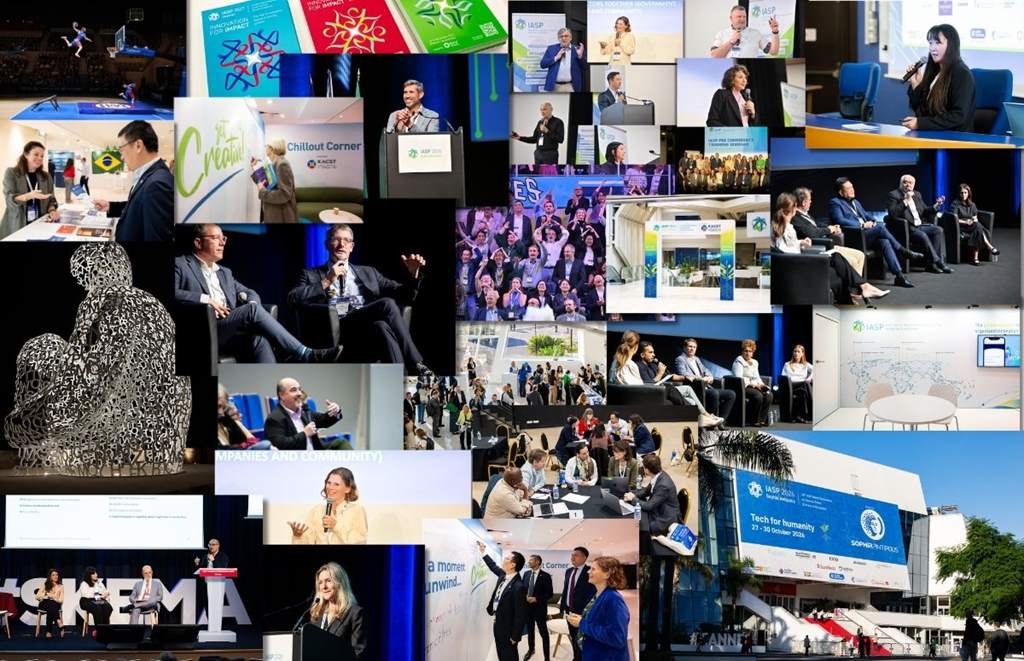
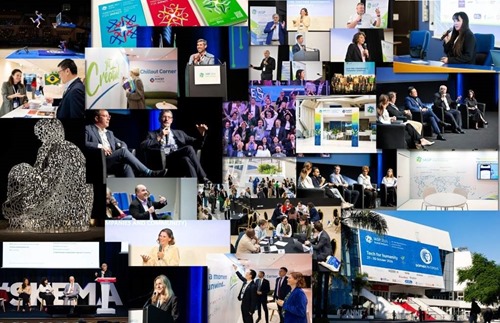
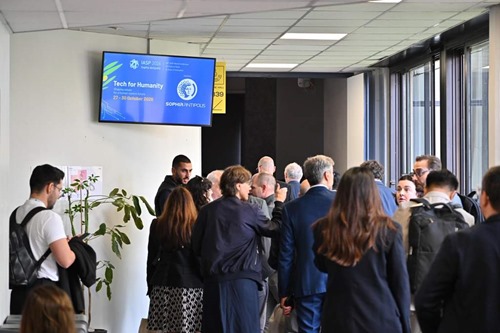
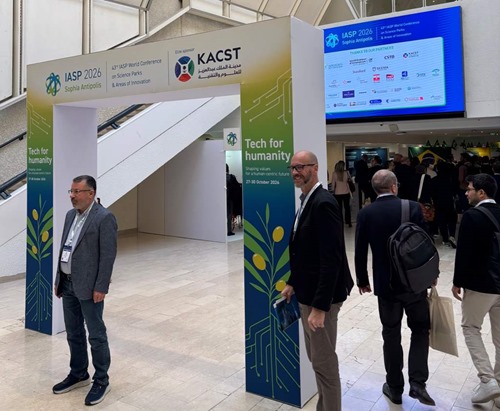
The 43rd IASP World Conference on Science Parks and Areas of Innovation took place in Cannes and Sophia Antipolis, France, from 27 to 30 October, bringing together 775 delegates from 64 countries. Hosted by Sophia Antipolis Technology Park, one of Europe's first and largest science parks, the conference addressed the theme “Tech for humanity: shaping values for a human-centric future”.
Across four days, discussions returned to a fundamental question: beyond what technology makes possible, how do we ensure that it serves people, reflects our values and delivers meaningful results for society? How can our industry drive the shift from “can we build it?” to “should we?”
Warming up on the Riviera: tours and training
Ahead of the official opening, the conference programme began with six technical tours offering delegates a closer look at Sophia Antipolis and its innovation ecosystem. The visits covered areas including AI, smart cities, life sciences and start-ups, alongside an excursion to Monaco.
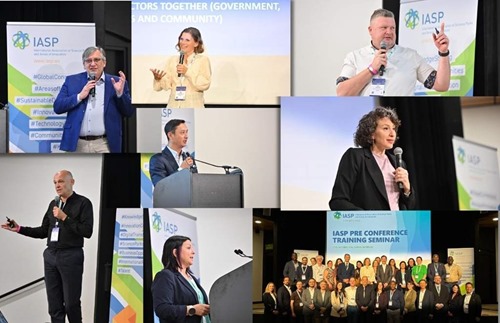
On 27 October, delegates could also take part in the customary Pre-conference Training Seminar, a one-day introduction to managing science parks, innovation districts, and areas of innovation. Sessions covered strategic models, incubation, services, communication and governance, with contributions from experts in Brazil, Türkiye, China, Estonia, Canada and Germany.
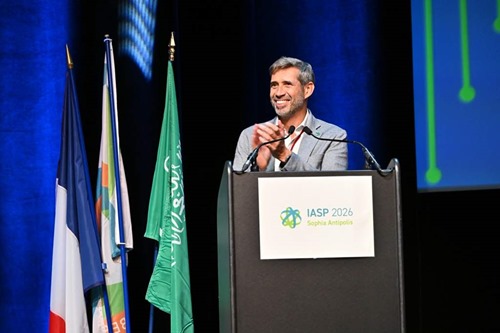
Later that evening, the New2IASP reception gave new members the opportunity to meet the IASP Board and team before the official Welcome Ceremony at the newly opened Pôle Alpha building in Sophia Antipolis. IASP CEO Ebba Lund and IASP International President Salvatore Majorana welcomed delegates alongside local representatives, including Jean Leonetti, Mayor of Antibes and President of Sophia Antipolis Technology Park.
Lights, camera, innovation: opening in Cannes
The conference officially opened at the Palais des Festivals et des Congrès de Cannes, the iconic venue on La Croisette widely known for its film festival, with welcome remarks by IASP leaders and local authorities.
During the opening we heard from Jean Leonetti, President of the Communauté d’Agglomération Sophia Antipolis and Mayor of Antibes; Bernard Kleynhoff, Regional Councillor for Provence-Alpes-Côte d’Azur and President of the Committee for Economic and Digital Development; and Charles Ange Ginésy, President of the Département des Alpes-Maritimes. They were joined by IASP CEO Ebba Lund and IASP International President Salvatore Majorana who warmly welcomed members and friends from around the world, thanked Sophia Antipolis and officially opened this year’s IASP World Conference.
After the IASP Highlights presentation, where Ebba Lund shared news and updates about our association, including upcoming regional conferences and a first look at the new IASP website, which launches at the end of the year with a brand new dedicated members' area, the audience heard the opening keynote by Juan Alonso, Professor at Stanford University, who looked ahead to the future of transportation. Electric air taxis and drone delivery, he explained, are no longer simply ideas for the distant future but technologies already being proven at scale. His conclusion was one of cautious optimism: “The dream is real”.
Tech for Humanity, one big question at a time
The scientific programme gathered more than 100 speakers and moderators from over 30 countries across 5 plenary sessions and 16 breakouts addressing some of the major questions facing innovation ecosystems. Topics included tech diplomacy, responsible AI, ethics by design, inclusive technologies, talent and education, healthcare, sustainable food systems, creative industries, brownfield transformations and climate action.
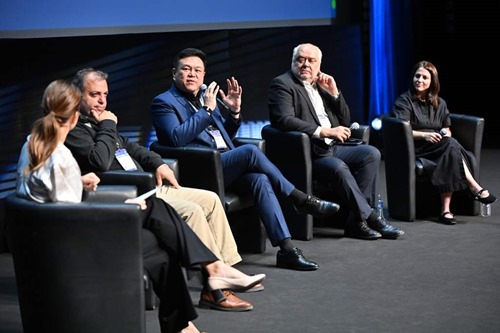
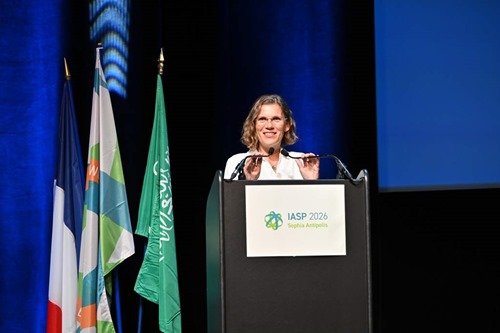
Moderated by our MC Sarah Russis, the plenaries set the tone for our discussion.
The opening plenary on Tech Diplomacy explored how innovation spaces can act as architects of international collaboration. Contributions from Qatar, Brazil, Argentina and Türkiye highlighted the importance of trust, accountability and well-designed partnerships in connecting ecosystems across borders. Julia Faita of Buenos Aires Innovation Park offered a practical reminder to “think big, start small”, noting that even a single email can be the beginning of an international success story.
The discussion on responsible AI turned to the challenge of moving artificial intelligence from prototype to safe, human-centred deployment.Tom Bentley of Melbourne Innovation District called on delegates to “build capability, not just technology”, while Lena Miranda of Linköping Science Park stressed that “in a fast-developing technology environment, humans are key”.
Transforming Healthcare examined the gap between research and market, often described as the “valley of death”, in Europe and offered a first look at the blueprints for Sophia Antipolis' upcoming medtech centre. Sara Landuydt of POM Antwerpen captured an important distinction in the discussion: “Strong organisations do not automatically create a strong system”. Progress depends not only on the strength of individual organisations, but also on how effectively they work together.
Two further plenaries looked at the places and natural environment that innovation ecosystems can help shape. Brownfield Transformations presented examples from Rome, Panama, Porto Alegre and Berlin, showing how former military bases, industrial sites and airfields can be repurposed as innovation ecosystems. Janelle Castrellon Ruiz of Ciudad del Saber described the deeper significance of such projects: “The greatest transformation was never about changing buildings, it was about turning a place once defined by division into a place of connection”.
The closing plenary on Climate Action for Humanity presented science parks and areas of innovation as living labs for decarbonisation, with examples from Kenya, Saudi Arabia, Belgium and France.
Exploring the challenges in practice
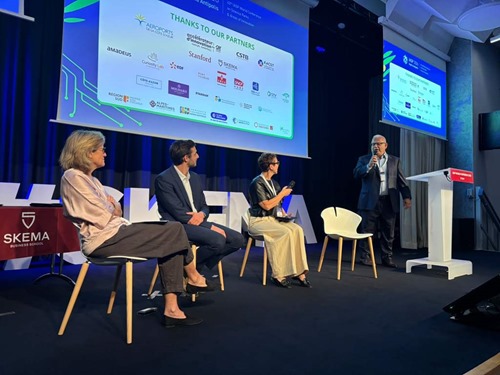
Alongside the plenaries, 16 breakout sessions gave delegates the opportunity to explore specific challenges and exchange practical experiences. The first eight, held at SKEMA Business School, covered AI and the human factor, sustainable food systems, resilient smart cities, cross-border collaboration, talent development, the evolving nature of the industry, ethics by design and inclusive technologies. A second set of eight parallel sessions on the following day extended the discussion into several interconnected areas.
Inclusive innovation and healthcare were the focus of two sessions, examining how innovation ecosystems can respond to societal needs. Examples ranged from a business model developed by French organisation AVENCOD to empower people with disabilities and neurodivergent people, to initiatives addressing access to healthcare and education in India and the FE+MALE Tech Heroes community promoting gender inclusivity in technology in the Netherlands. In healthcare, contributions highlighted Brazil's efforts to strengthen infrastructure and business support, as well as Rad@AID, an AI solution for structured chest X-ray reporting. The discussions underlined the need for long-term investment and stronger connections between universities, incubators and other ecosystem actors, highlighting the role of science and technology parks and innovation districts as “orchestrators and not only implementers”.
Ethical entrepreneurship and climate action brought the discussion to the decisions that shape innovation in practice. The session on value-driven innovation considered how human and societal needs can become measurable criteria influencing how businesses are designed, funded and assessed. The session included the presentation of the results of the human-centricity gap barometer that was run by Vianeo in collaboration with IASP to measure how the world’s innovation ecosystems say they value human-centric innovation, and how far that has actually reached their day-to-day selection decisions.
A related discussion on digital platforms for climate action presented examples ranging from citizen planning initiatives in Poznań (Poland) to start-up carbon calculators at DEPARK (Türkiye) and a 76% reduction in electricity consumption at an SME through work involving Sandbacka Science Park and AssetBook (Sweden). These examples showed how digital tools can support measurable progress, provided they are connected to the needs of organisations and the people involved.
Education and workforce transformation explored how innovation spaces can help people adapt to changing skills requirements and working environments. Examples included a school embedded in the Biopark ecosystem in Brazil, lifelong learning programmes at Ruta N in Colombia, STEAM teacher training involving NASA in Mexico, and an AI-supported learning engine developed by Hubconcepts in Finland. The discussion on automation also highlighted that successful workforce transformation depends on how new technologies are introduced: involving workers from the outset, implementing change gradually and developing skills alongside new systems. As one of the session's takeaways put it, “Change the way we work, not who does the work”.
Finally, creative industries and ecosystem governance highlighted the importance of local strengths, relationships and the way different actors work together. Examples included initiatives connecting artisans, designers and markets in Thailand, the transformation of a former military site in Prizren, Kosovo, into a 14-hectare innovation and training park, and the role of major companies in Saudi Arabia as anchors for wider industries. Discussions on governance looked beyond physical infrastructure to the services and relationships that help ecosystems function. An example from Argentina's urban sandboxes raised an important question about how innovation projects should be assessed: beyond the number of pilots and technologies tested, what has the city actually learned?
The closing keynote by Stéphane La Branche (Canada) brought the theme back to the people and communities that technology is meant to serve. Smart grids, smart meters and other technical solutions remain incomplete, he argued, unless they take account of the diversity of their users and how people think and behave. He encouraged delegates to look beyond human-centric innovation towards a more “life-centric” approach, and challenged innovation spaces to share not only their successes but also their failures and the lessons learned from them.
Taking the discussion beyond the conference
The IASP Sophia Antipolis Takeaways session brought together some of the recurring ideas from the week. Speakers reflected on the week, calling for science parks, innovation districts and areas of innovation to act as orchestrators that connect people across sectors, for innovation to be measured by its value and societal impact as well as by technical readiness, and for the connections made in Sophia Antipolis to become lasting collaborations.
Beyond the conference sessions, the social programme provided further opportunities to meet and connect, from the Welcome Reception on the rooftop terrace at Pôle Alpha in Sophia Antipolis, to the informal evening at Azur Arena, home of the Antibes Sharks basketball team, and the Gala Dinner at Bastion Saint-Jaume in Antibes. The Gala Dinner also included the welcome of IASP's newest members and the announcement of the 2026 Inspiring Solutions Awards winners, presented by Gladys Koletit on behalf of programme sponsor Technopolis Development Authority (Kenya).
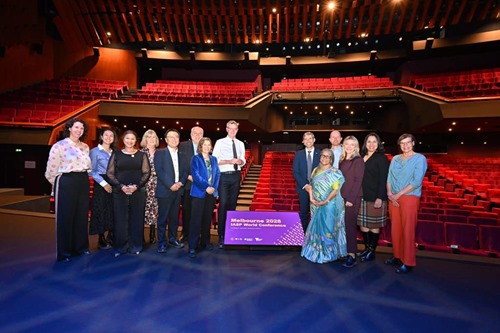
The conference also marked two important milestones for the IASP network. At the General Assembly, IASP Full Members voted for Melbourne Innovation District with RMIT University in Australia to host the 45th IASP World Conference in 2028. The election followed strong bids from Unicamp in Campinas, Brazil, and Andhra Pradesh MedTech Zone – AMTZ in Vizag, India.
The closing ceremony then looked ahead to the next edition, with the ceremonial handover of the IASP World Conference flag to Dhahran Techno Valley, host of the 44th IASP World Conference on Science Parks and Areas of Innovation.
Four days of discussions, examples and exchanges have come to an end, but the questions raised by the theme will remain relevant: how can innovation spaces ensure that technology serves people, creates value for society and contributes to a more sustainable future? The ideas and experiences shared in Cannes and Sophia Antipolis will continue to shape the work of the IASP network and reinforce the role of science parks, innovation districts and areas of innovation as drivers of sustainable, inclusive and human-centric development.